The Ministry of Finance and the EIB held the annual review of the joint project portfolio worth €4.7 billion
.jpg.jpeg)
.jpg.jpeg)
.jpg.jpeg)
.jpg.jpeg)
.jpg.jpeg)
.jpg.jpeg)

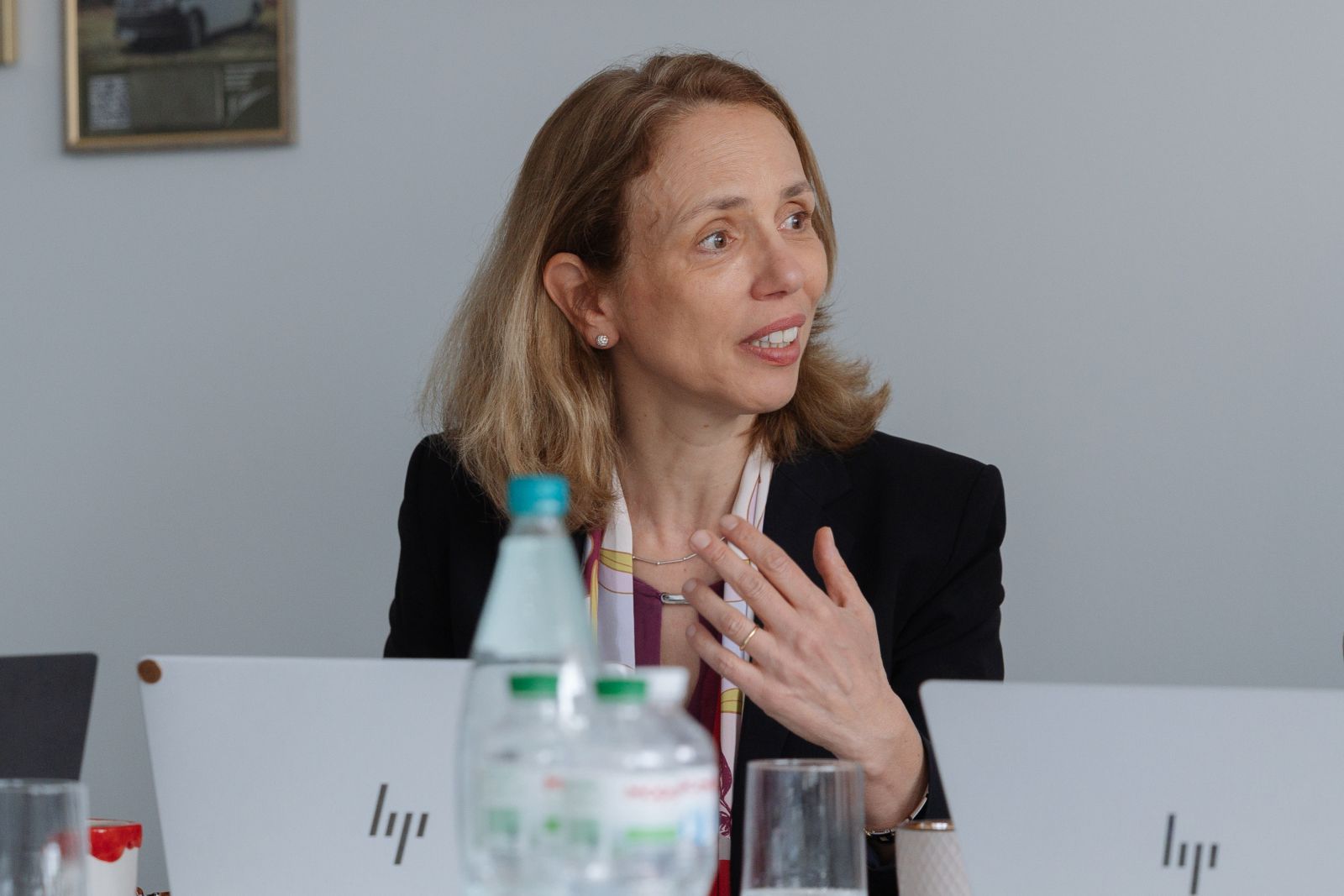
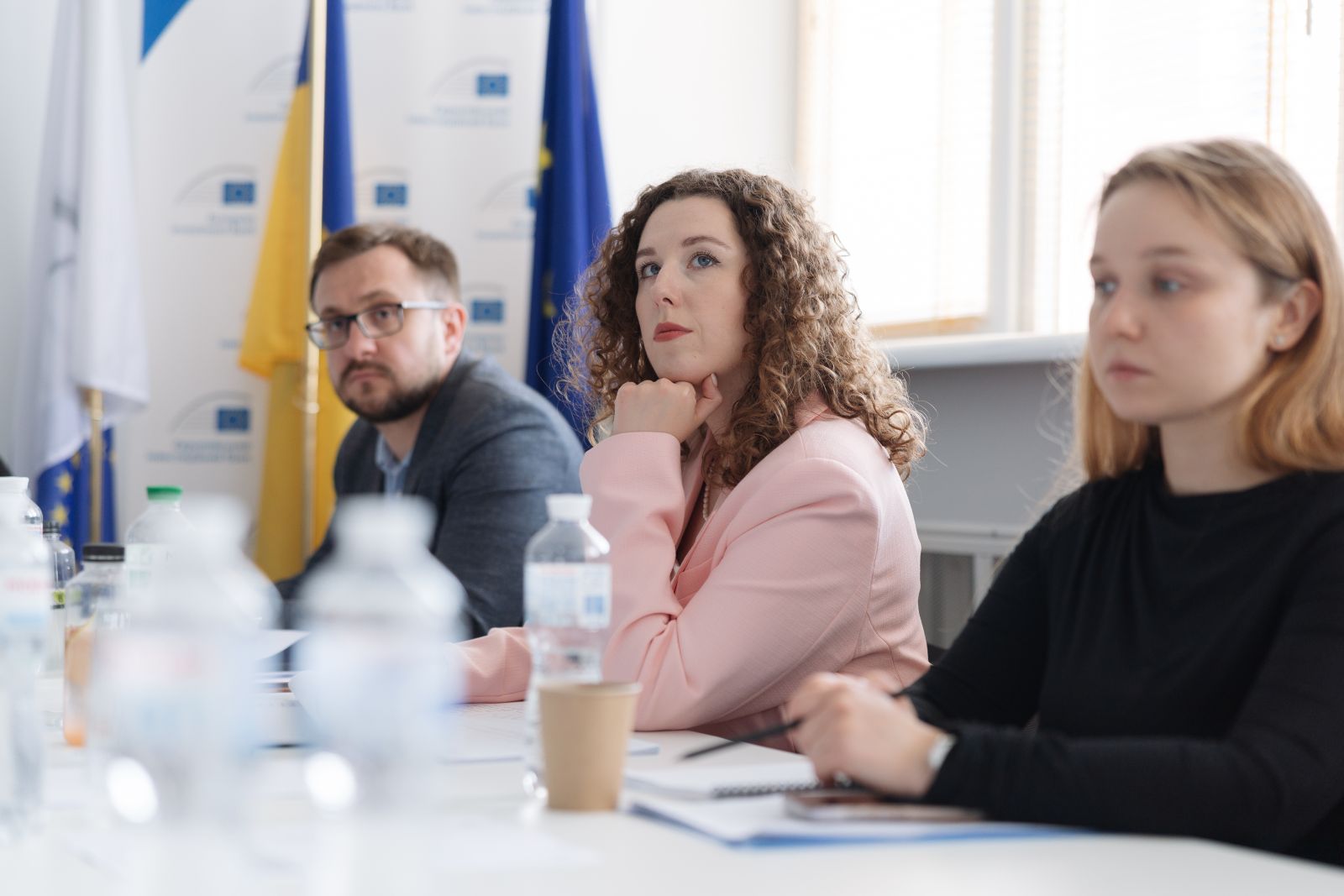

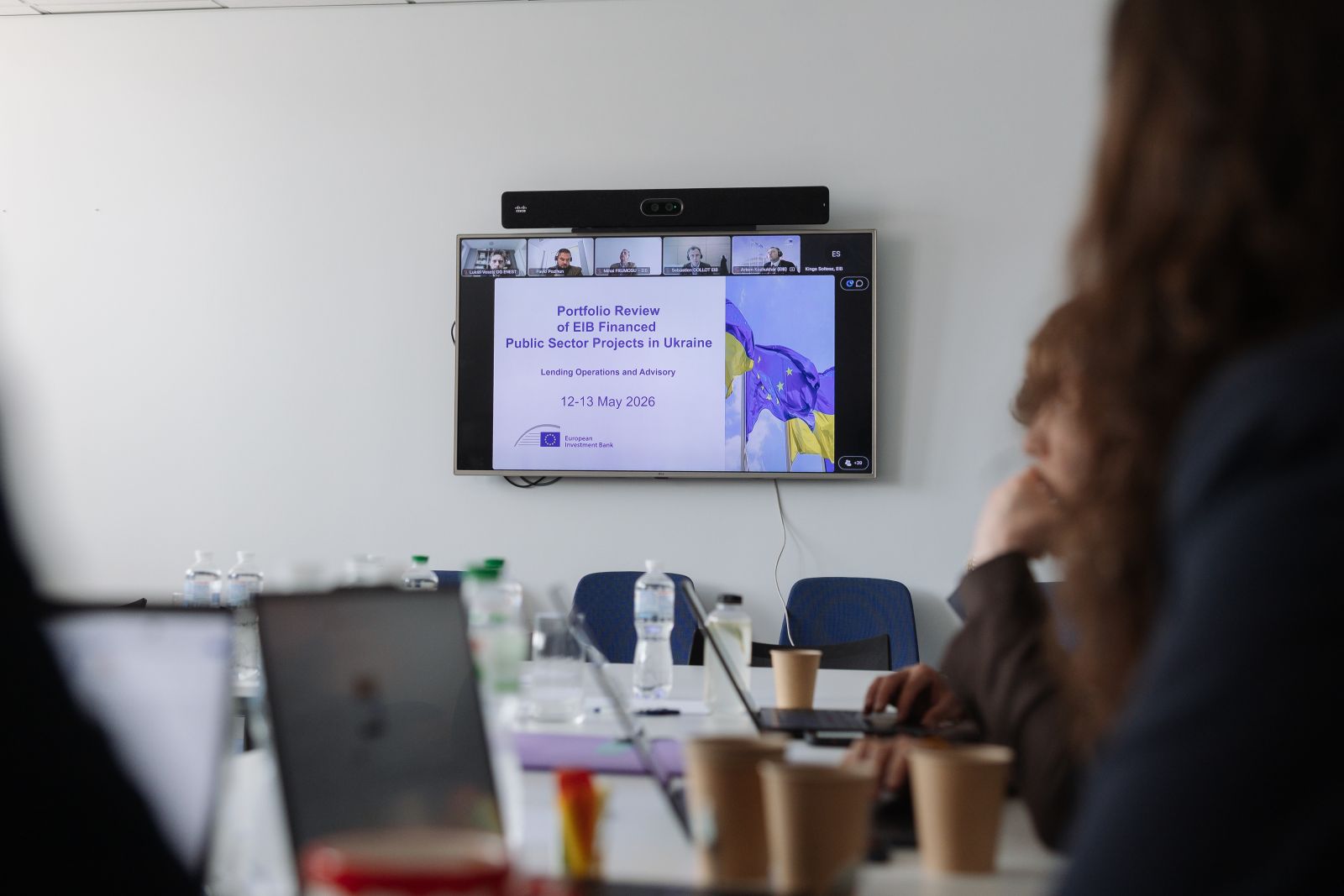


The Ministry of Finance of Ukraine and the European Investment Bank (EIB) held the annual review of their joint loan portfolio.
The event took place in Kyiv, chaired by Deputy Minister of Finance Olga Zykova and the Head of Regional Hub for Eastern Europe Kristina Mikulova, with the participation of European Commission delegates.
The EIB loan portfolio review also brought together representatives of Ukrainian government bodies – responsible implementers and beneficiaries of projects, including the Ministry for Development of Communities and Territories of Ukraine, the Ministry of Education and Science of Ukraine, the Ministry of Internal Affairs of Ukraine, NJSC “Naftogaz of Ukraine”, NPC “Ukrenergo”, PJSC “Ukrhydroenergo”, JSC “Ukrzaliznytsia”, as well as a number of state-owned banks – JSC “Ukreximbank”, JSC “Oschadbank”, JSB “Ukrgasbank”– and other institutions.
Deputy Minister of Finance Oga Zykova opened the event by thanking the EIB for its unprecedented support to Ukraine. In 2025, the Bank’s financing for Ukraine’s public and private sectors reached EUR 1.5 billion. The funds were directed, in particular, to restoring the energy system, rebuilding schools and hospitals, and modernising public transport in Ukrainian cities. In the previous year, Ukraine also ensured a high level of EIB disbursement at state level – nearly EUR 145 million – and signed five agreements worth a total of EUR 390.5 million, including four loan agreements worth EUR 374 million and one grant agreement worth EUR 16.5 million.
Overall, the EIB portfolio in Ukraine includes 27 active projects with a total value of EUR 4.7 billion, making it one of the largest among international financial institutions operating in the country.
Olga Zykova highlighted the launch of a new model for financing state-owned enterprises in 2025 without sovereign guarantees. Pilot agreements worth EUR 120 million with Ukrhydroenergo (for the restoration of damaged hydropower plant equipment) and EUR 300 million with Naftogaz of Ukraine (for emergency natural gas procurement) demonstrated the effectiveness of using EU guarantees under the European Commission’s Pillar II Ukraine Facility instrument. These operations enable financing of critical needs without increasing public debt and without risks to cooperation with the International Monetary Fund. Ukraine expects further development of this financing model.
The Deputy Minister emphasized that energy and transport are the priority sectors of cooperation in 2026. Following new waves of russian attacks, the restoration of fuel and energy infrastructure (including facilities of Ukrenergo and Naftogaz) as well as Ukrzaliznytsia infrastructure remains critically important.
The parties also discussed the preparation of the project pipeline for 2026. The preliminary list of EIB projects in Ukraine under the Ukraine Facility for the next two years amounts to around EUR 600 million, including new initiatives aimed at improving transport connectivity, energy-efficient renovation of multi-apartment buildings, and strengthening the resilience of Ukraine’s integrated energy system.
In particular, agreements are planned to be signed at the Ukraine Recovery Conference (URC) in Gdańsk this summer under the following projects:
-
“Ukraine Social Housing Reconstruction” – EUR 50 million loan and EUR 50 million grant. The project aims to provide access to quality and affordable housing for vulnerable groups, in particular elderly internally displaced persons who lived in occupied territories or whose homes were destroyed by the war, as well as families that include a person with a disability;
-
“Solidarity Lanes. Transport Network Recovery” – EUR 96 million loan. This is a continuation of the ongoing project to restore and develop road connections with EU countries. In particular, major repairs are planned for selected sections of the Kyiv–Chop, Ternopil–Lviv–Rava-Ruska highways, as well as the modernization of border crossing points under the EU Connecting Europe Facility programme. Planned works include the construction of truck parking areas (Ternopil–Lviv–Rava-Ruska and Lviv–Krakovets) and access roads to the truck terminal at border crossing points “Yahodyn” No. 2 and “Yahodyn” No. 3 (Volyn region).
-
“Transport Connectivity. Phase II and III” – EUR 50 million EU grant. Reconstruction of overpasses and bridges on major highways, including construction of an overpass over the railway on the Kyiv–Chop highway, construction of an overpass above the Rivne–Zdolbuniv–Mizoch–Dubno road, construction of an interchange on the Kyiv–Odesa highway etc.
During the portfolio review, the necessary steps for effective preparation and implementation of EIB projects in Ukraine were outlined. For the first time, a comprehensive review of advisory support provided to Ukraine under the Jaspers initiative was also conducted.
Summing up the results, Olga Zykova stressed that the partnership with the EIB is a key element of Ukraine’s reconstruction and long-term resilience.
“Cooperation between Ukraine and the EIB creates added value for economic growth, helps maintain macro-financial stability, ensures the implementation of critically important investment projects, and improves the lives of Ukrainians in communities. Regardless of the situation on the battlefield, we continue moving forward on the path of development. Together, we are not only working on recovery, but also building a resilient European Ukraine,” the Deputy Minister of Finance emphasized.