Olga Zykova at the EIB Group Forum: Since 2022, Ukraine has received nearly $173 billion in budget support from international partners
-
About Ministry
- Recruitment
-
Accountable agencies
-
State Enterprises and Institutions Belonging to the Sphere of Management of the Ministry
- State enterprise "Management for the operation of the property complex"
- SERVICE AND PUBLISHING CENTR
- Central Treasury sample control enterprise
- Eastern state-owned enterprise of sampling control
- Western state-owned enterprise screening control
- Southern state enterprise of sampling control
- Dnipropetrovsk state-owned enterprise of sampling control
- State enterprise Kyiv offset factory
- State Service for Financial Monitoring
- State Treasury
- The State Audit Service of Ukraine
- State Tax Service of Ukraine
- State Customs Service of Ukraine
- Personnel Audit Procedures of State Customs Service
- State Tax University
-
State Enterprises and Institutions Belonging to the Sphere of Management of the Ministry
- Minfin Panel
-
Policy Issues
- Budget policy
- Tax Policy
-
Customs Policy
-
Integration of customs legislation into EU law
- Direct and indirect customs representation: possible scenarios for declaring goods and the role of a customs broker
- Customs representative and customs holder: who submits and signs documents
- Confirmation of the reliability of credentials for obtaining authorizations
- Authorization to carry out customs brokerage activities
- Integration of customs IT systems to MASP-C
-
Integration of customs legislation into EU law
-
Accounting and Auditing
-
Accounting
-
Introduction of International Financial Reporting Standards
- Translation of International Financial Reporting Standards 2025
- Translation of international financial reporting standards of 2024
- Translation of international financial reporting standards of 2023
- Archive of translations
- Taxonomy
- Translation of technical publications
- General Clarifications (filled in after the preparation of the relevant letters of explanation)
- Accounting in Private Sector
- Accounting in the Public Sector
- Methodological Accounting Council under the Ministry of Finance of Ukraine (download a short description)
- IFRS Council under the Ministry of Finance of Ukraine (download a short description)
-
Introduction of International Financial Reporting Standards
- Auditing
- Sustainability reporting
-
Accounting
-
Debt policy
- Overview
- Debt News
- Debt Statistics
- Domestic Bonds
- Primary Dealers
- Eurobonds
- Credit Rating
- Investor Relations
- DMO Awards
- Anti-money laundering policy (AML)
- Financial Policy
- National revenue strategy
-
International Cooperation
-
Partners
- EU
- International Monetary Fund
-
Cooperation in Attracting Financing from the International Financial Institutions
- Development Bank of the Council of Europe
- Procedure for attracting funds of International Financial Institutions
- World Bank
- EBRD
- EIB
- Deutsche Gesellschaft für Internationale Zusammenarbeit (GIZ) GmbH
- KFW
- Register of Joint IFIs Projects at the Stage of Preparation and Implementation (information)
- International Technical Assistance (within the competence of the Ministry of Finance)
- Monitoring of international technical assistance projects
- Cooperation with the Development Partners
- Ukraine Donor Platform
-
Partners
- International Tax Relations
- Development of Public Internal Financial Control (PIFC)
-
Public investment management
- Regulatory documents
- Implementation of the roadmap for reforming the management of public investments
- Interdepartmental Commission on the Distribution of Public Investments
- Unified portfolio of public investment projects (list of priority public investment projects)
- Interdepartmental working group on reforming the public investment management system
- Reference information
-
Other Areas of Public Policy
- Internal Audit
- Audit Committee of the Ministry of Finance of Ukraine
- Scientific and scientific and technical activity
- Reform Support Team at the Ministry of Finance of Ukraine
- Verification of State Social Payments
-
Fiscal Risks Managament
- Clarifications
- Legislation on Fiscal Risks Management
- List of Economic Entities with which Major Fiscal Risks May Be Related
- Reports
- List of business entities to which the Ministry of Finance approves proposals for individual financial indicators for the planning period, as well as proposals for maximum thresholds for the volume of capital investments
- Operations with precious stones and metals
- Licensing
- Public Finance Management Strategy (PFMS)
- Strategic Plan
-
Key Spending Unit - Ministry of Finance
- Budget Requests
- Passports of Budget Programs
- Evaluation of the Effectiveness of Budget Programs
- Procurement Reports
- Reports on the implementation of public investment projects
- Budget Information
- Information on the effectiveness of the use of public funds
- The structure and volume of budget funds under budget programs
- Cash Management
- Programs
-
Legislation
-
Regulatory Activity
- Regulatory Performance Tracking Reports 2026
- Activity plan of the Ministry of Finance of Ukraine for the preparation of draft regulatory acts in 2026.
- Schedule of measures in 2026 to track the effectiveness of regulatory acts of the Ministry of Finance of Ukraine
- Reports on tracking the effectiveness of regulatory acts in 2025.
- Activity plan of the Ministry of Finance of Ukraine for project preparation regulatory acts in 2025
- Plan-schedule of implementation of measures in 2025 regarding performance tracking regulatory acts of the Ministry of Finance of Ukraine
- reports_on_the_effectiveness_of_regulatory_acts_2024
- The activity plan for the preparation of the regulatory acts draft 2024
- Schedule of measures to monitor the effectiveness of regulatory acts 2024
- reports_on_the_effectiveness_of_regulatory_acts_2023
- The activity plan for the preparation of the regulatory acts draft 2022
- Schedule of measures to monitor the effectiveness of regulatory acts 2023
- Reports on the effectiveness of regulatory acts 2022
- The activity plan for the preparation of the regulatory acts draft 2022
- Schedule of measures to monitor the effectiveness of regulatory acts 2022
- Reports on the effectiveness of regulatory acts 2020
- The activity plan for the preparation of the regulatory acts draft 2021
- Schedule of measures to monitor the effectiveness of regulatory acts 2021
- Reports on the effectiveness of regulatory acts 2020
- The activity plan for the preparation of the regulatory acts draft 2020
- Schedule of measures to monitor the effectiveness of regulatory acts 2020
- Reports on the effectiveness of regulatory acts 2019
- The activity plan for the preparation of the regulatory acts draft 2019
- Schedule of measures to monitor the effectiveness of regulatory acts 2019
- Reports on the effectiveness of regulatory acts 2018
- The activity plan for the preparation of the regulatory acts draft 2018
- Schedule of measures to monitor the effectiveness of regulatory acts 2018
- Reports on the effectiveness of regulatory acts 2017
- The activity plan for the preparation of the regulatory acts draft 2017
- Schedule of measures to monitor the effectiveness of regulatory acts 2017
- Reports on the effectiveness of regulatory acts 2016
- The activity plan for the preparation of the regulatory acts draft 2016
- Schedule of measures to monitor the effectiveness of regulatory acts 2016
- Reports on the effectiveness of regulatory acts 2015
- The activity plan for the preparation of the regulatory acts draft 2015
-
Draft Regulatory Acts Discussion
- Draft regulatory acts for discussion in 2026
- Draft regulatory acts for discussion in 2025.
- Regulatory acts draft for discussion 2024
- Regulatory acts draft for discussion 2023
- Regulatory acts draft for discussion 2022
- Regulatory acts draft for discussion 2021
- Regulatory acts draft for discussion 2020
- Regulatory acts draft for discussion 2019
- Regulatory acts draft for discussion 2018
- Regulatory acts draft for discussion 2017
- Regulatory acts draft for discussion 2016
- Regulatory acts draft for discussion 2015
-
Draft Legislation
- Draft regulatory legal acts in 2026
- Draft normative legal acts in 2025.
- Legal acts drafts 2024
- Legal acts drafts 2023
- Legal acts drafts 2022
- Legal acts drafts 2021
- Legal acts drafts 2020
- Legal acts drafts 2019
- Legal acts drafts 2018
- Legal acts drafts 2017
- Legal acts drafts 2016
- Legal acts drafts 2015
-
Regulatory Activity
-
Data
- Cooperation with Civil Society
- Press Center
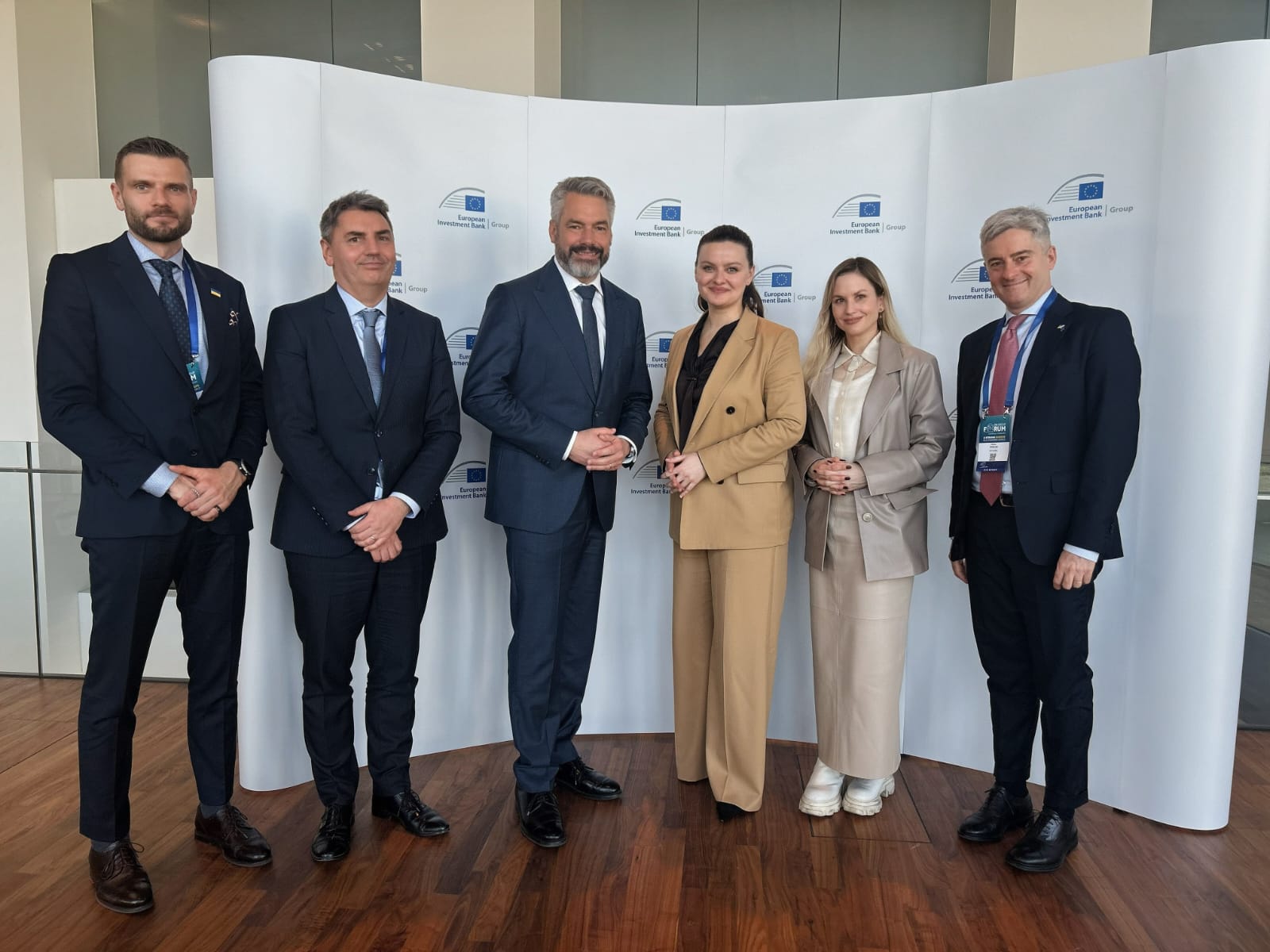
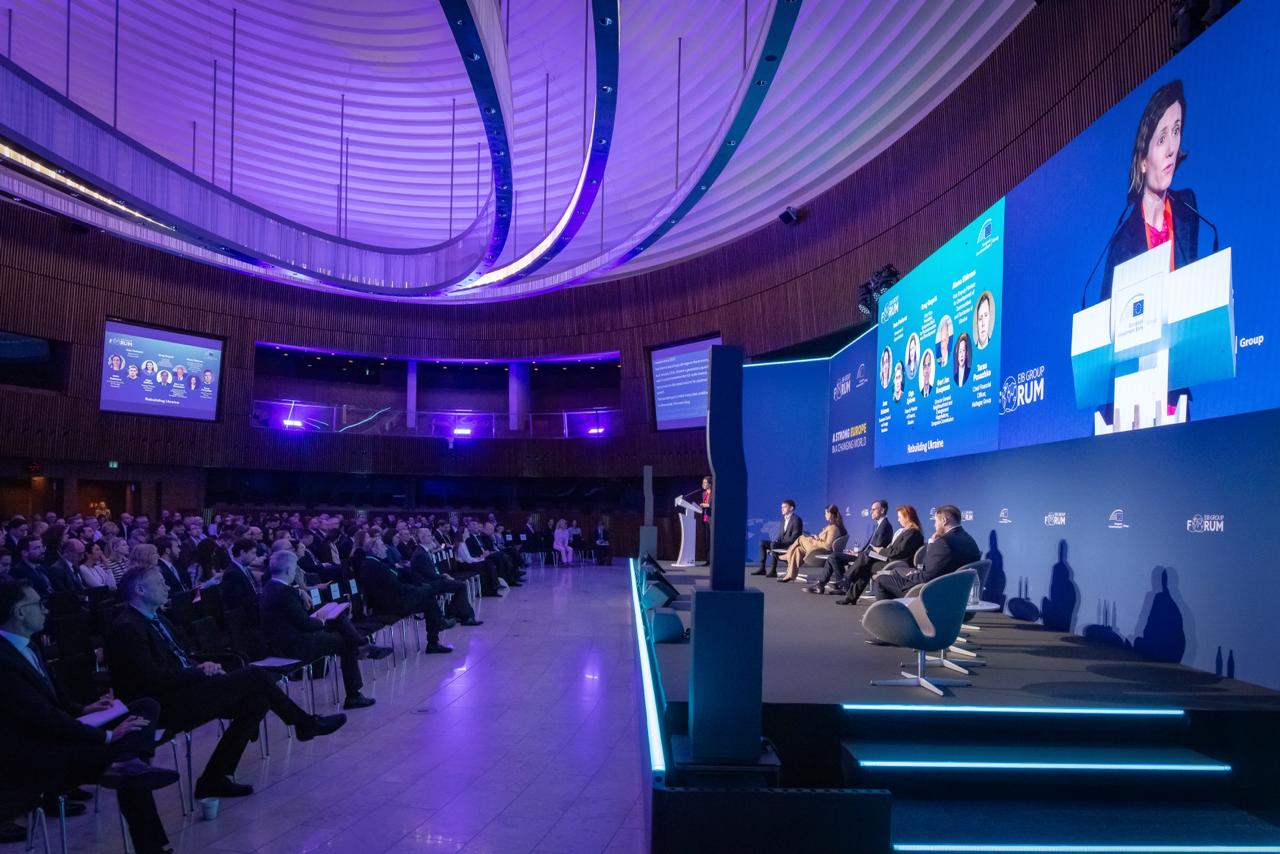
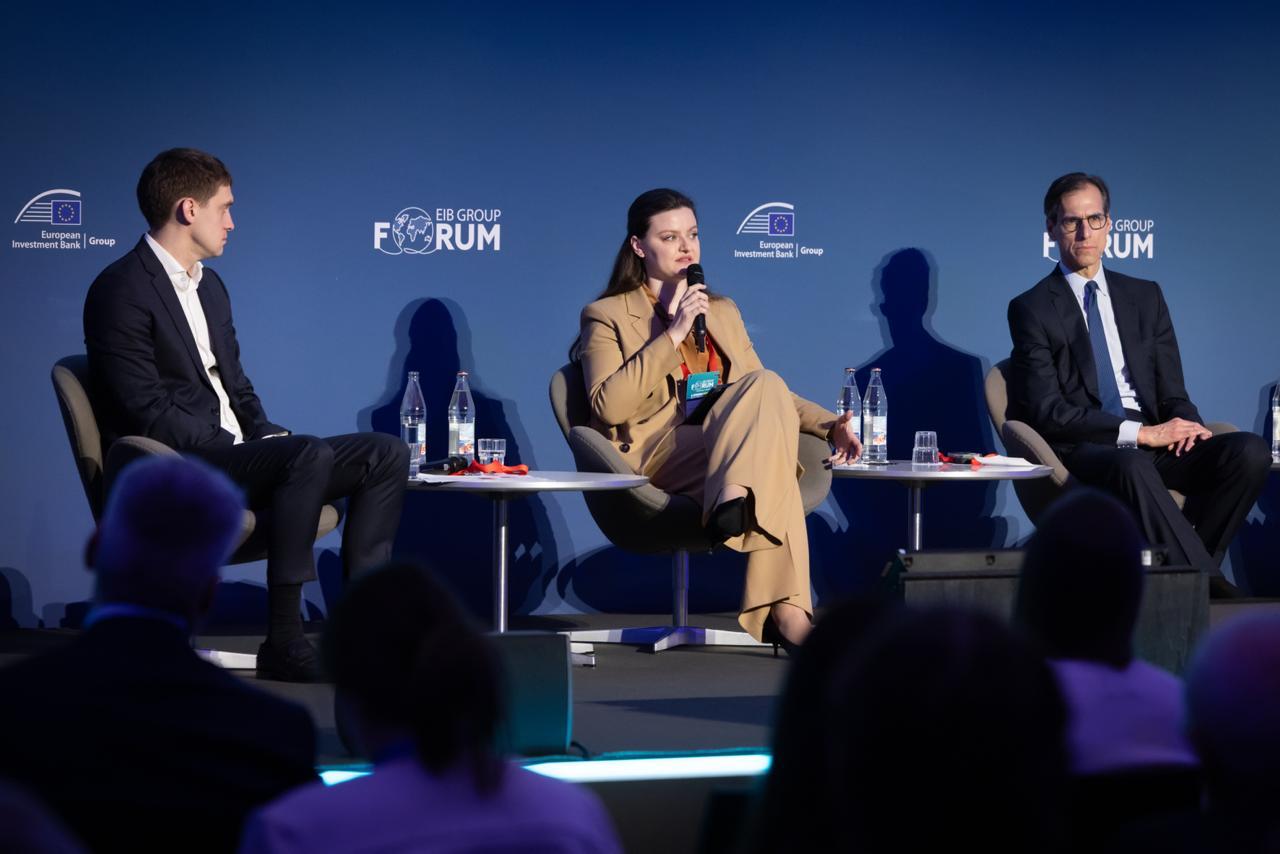
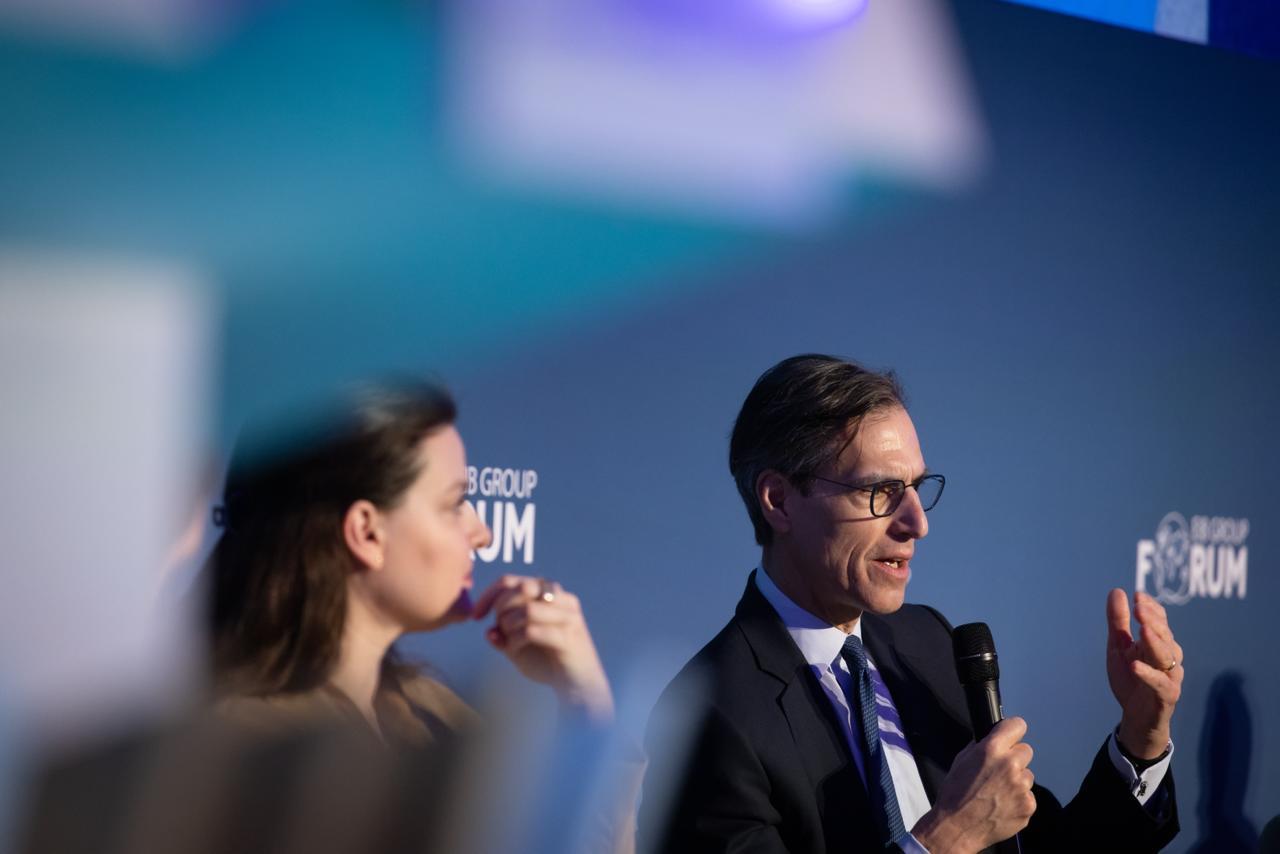
Deputy Minister of Finance of Ukraine Olga Zykova participated in the international EIB Group Forum in Luxembourg titled “A Strong Europe in a Changing World.” The forum was organized by the European Investment Bank.
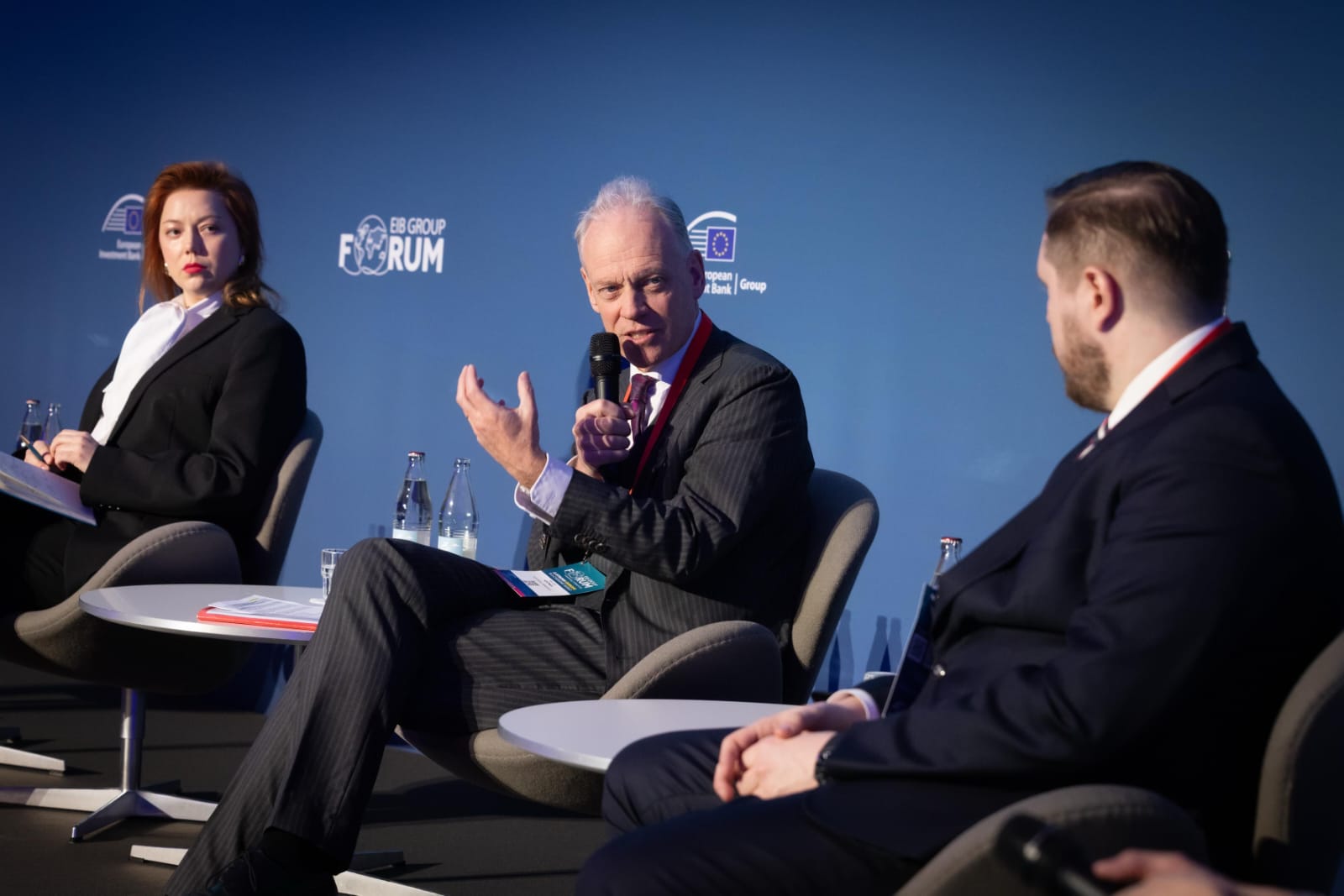
As part of the event, she took part in the panel discussion “Rebuilding Ukraine,” which also featured representatives of the Ministry for Development of Communities and Territories of Ukraine, Zaporizhzhia Regional Military Administration, Naftogaz of Ukraine, the European Commission, and the European Bank for Reconstruction and Development.
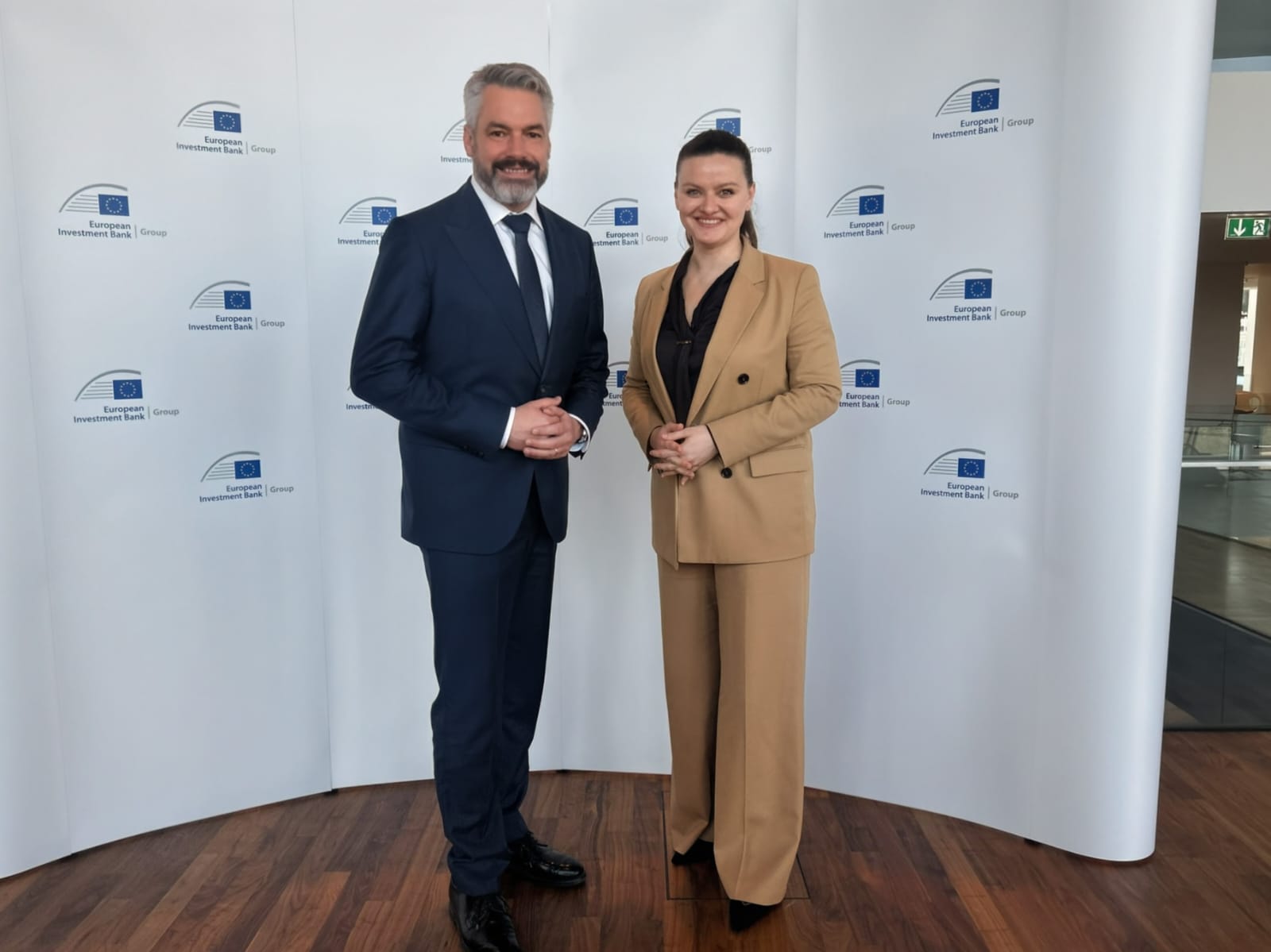
Olga Zykova also held a bilateral meeting with European Investment Bank Vice-President Karl Nehammer. The parties discussed the implementation of the current project portfolio, opportunities to accelerate the mobilization of financing, and the preparation of new initiatives for 2026–2027 using European Union guarantees.
During the panel discussion, Olga Zykova emphasized that despite the full-scale war, Ukraine continues to demonstrate the resilience of its economy and financial system. Currently, around 60% of the State Budget is directed toward defense needs, while social and humanitarian expenditures are largely financed with the support of international partners.
Since 2022, Ukraine has received more than USD 172.9 billion in budget support, which has become a key factor in maintaining the country’s macro-financial stability.
At the same time, the scale of reconstruction needs remains significant. According to the Fifth Rapid Damage and Needs Assessment (RDNA5), Ukraine’s total recovery and reconstruction needs for the next ten years amount to nearly USD 588 billion.
In this context, the Deputy Minister stressed the importance of continued systematic cooperation with international financial institutions, including the International Monetary Fund, the World Bank, the European Investment Bank, the European Bank for Reconstruction and Development, KfW development bank, and other partners.
“The scale of these challenges is unprecedented, therefore Ukraine critically needs to maintain consolidated support from international partners to ensure sustainable recovery and long-term economic transformation,” said Olga Zykova.
At the end of February, the Executive Board of the International Monetary Fund approved a new four-year Extended Fund Facility (EFF) program for Ukraine totaling USD 8.1 billion. The first tranche of USD 1.5 billion has already been disbursed to the State Budget. The IMF program, which runs from 2026 to 2029, is an important signal of confidence for international partners and creates the foundation for further large-scale support from the European Union and the G7 countries.
The Deputy Minister also welcomed the European Union’s decision to mobilize EUR 90 billion in financial support for Ukraine for 2026–2027 and expressed hope that EU institutions will soon adopt the necessary decisions to begin the first disbursements as early as the second quarter of 2026.
In addition, Olga Zykova stressed the importance of introducing the Reparations Loan mechanism, which would use frozen russian sovereign assets to finance Ukraine’s recovery.
“Given the scale of recovery needs that Ukraine must address between 2026 and 2035, it will be difficult to implement a full-scale reconstruction of the country without a Reparations Loan mechanism,” she noted.
According to the Deputy Minister, Ukraine aims not only to ensure macro-financial stability during wartime but also to create the conditions for long-term economic development and full membership in the European Union.
“We do not want to remain in survival mode. Our goal is long-term economic transformation and full integration into the European Union. Ukraine’s recovery is impossible without the active role of international financial institutions, the development of private capital, and the launch of a reparations mechanism. Together with grants, concessional loans, and guarantees, this will allow us not only to rebuild what has been destroyed but also to create a modern economy of the future,” emphasized Olga Zykova.
In order to remain a reliable partner for the international community, Ukraine continues to implement systemic reforms in line with EU standards and is strengthening coordination with international financial institutions, which has significantly deepened compared to the beginning of the full-scale war.
According to Olga Zykova, financing Ukraine’s recovery requires a balanced approach to mobilizing resources that combines grants, concessional loans, and private capital, while also using blended finance mechanisms and public-private partnerships. An important instrument is also attracting financing under European Union guarantees, which will help preserve the country’s debt sustainability.
Such an approach will make it possible not only to restore destroyed infrastructure but also to ensure the long-term modernization and transformation of Ukraine’s economy in line with European standards.