Government approves legislation package initiated by ministry of finance to deliver debt relief for debtors
-
About Ministry
- Recruitment
-
Accountable agencies
-
State Enterprises and Institutions Belonging to the Sphere of Management of the Ministry
- State enterprise "Management for the operation of the property complex"
- SERVICE AND PUBLISHING CENTR
- Central Treasury sample control enterprise
- Eastern state-owned enterprise of sampling control
- Western state-owned enterprise screening control
- Southern state enterprise of sampling control
- Dnipropetrovsk state-owned enterprise of sampling control
- State enterprise Kyiv offset factory
- State Service for Financial Monitoring
- State Treasury
- The State Audit Service of Ukraine
- State Tax Service of Ukraine
- State Customs Service of Ukraine
- Personnel Audit Procedures of State Customs Service
- State Tax University
-
State Enterprises and Institutions Belonging to the Sphere of Management of the Ministry
- Minfin Panel
-
Policy Issues
-
Budget policy
- Budget
- Transparent Budget
- BudgetPRO Project - Budget Policy
- Tax Policy
-
Customs Policy
-
Integration of customs legislation into EU law
- Direct and indirect customs representation: possible scenarios for declaring goods and the role of a customs broker
- Customs representative and customs holder: who submits and signs documents
- Confirmation of the reliability of credentials for obtaining authorizations
- Authorization to carry out customs brokerage activities
- Integration of customs IT systems to MASP-C
- Draft of the new Customs Code of Ukraine
-
Integration of customs legislation into EU law
-
Accounting and Auditing
-
Accounting
-
Introduction of International Financial Reporting Standards
- Translation of International Financial Reporting Standards 2026
- Translation of International Financial Reporting Standards 2025
- Translation of international financial reporting standards of 2024
- Translation of international financial reporting standards of 2023
- Archive of translations
- Taxonomy
- Translation of technical publications
- General Clarifications (filled in after the preparation of the relevant letters of explanation)
- Strategy for applying international financial reporting standards
- Accounting in Private Sector
- Accounting in the Public Sector
- Methodological Accounting Council under the Ministry of Finance of Ukraine (download a short description)
- IFRS Council under the Ministry of Finance of Ukraine (download a short description)
-
Introduction of International Financial Reporting Standards
- Auditing
- Sustainability reporting
-
Accounting
-
Debt policy
- Overview
- Debt News
- Debt Statistics
- Domestic Bonds
- Primary Dealers
- Eurobonds
- Credit Rating
- Investor Relations
- DMO Awards
- Anti-money laundering policy (AML)
- Financial Policy
- National revenue strategy
-
International Cooperation
-
Partners
- EU
- International Monetary Fund
-
Cooperation in Attracting Financing from the International Financial Institutions
- Development Bank of the Council of Europe
- Procedure for attracting funds of International Financial Institutions
- World Bank
- EBRD
- EIB
- Deutsche Gesellschaft für Internationale Zusammenarbeit (GIZ) GmbH
- KFW
- Register of Joint IFIs Projects at the Stage of Preparation and Implementation (information)
- International Technical Assistance (within the competence of the Ministry of Finance)
- Monitoring of international technical assistance projects
- Cooperation with the Development Partners
- Ukraine Donor Platform
-
Partners
- International Tax Relations
- Development of Public Internal Financial Control (PIFC)
-
Public investment management
- Regulatory documents
- Implementation of the roadmap for reforming the management of public investments
- Interdepartmental Commission on the Distribution of Public Investments
- Unified portfolio of public investment projects (list of priority public investment projects)
- Interdepartmental working group on reforming the public investment management system
- Reference information
-
Other Areas of Public Policy
- Internal Audit
- Audit Committee of the Ministry of Finance of Ukraine
- Scientific and scientific and technical activity
- Reform Support Team at the Ministry of Finance of Ukraine
- Verification of State Social Payments
-
Fiscal Risks Managament
- Clarifications
- Legislation on Fiscal Risks Management
- List of Economic Entities with which Major Fiscal Risks May Be Related
- Reports
- List of business entities to which the Ministry of Finance approves proposals for individual financial indicators for the planning period, as well as proposals for maximum thresholds for the volume of capital investments
- Operations with precious stones and metals
- Licensing
- Public Finance Management Strategy (PFMS)
- Strategic Plan
-
Key Spending Unit - Ministry of Finance
- Budget Requests
- Passports of Budget Programs
- Evaluation of the Effectiveness of Budget Programs
- Procurement Reports
- Reports on the implementation of public investment projects
- Budget Information
- Information on the effectiveness of the use of public funds
- The structure and volume of budget funds under budget programs
- Cash Management
- Programs
-
Budget policy
-
Legislation
-
Regulatory Activity
- Regulatory Performance Tracking Reports 2026
- Activity plan of the Ministry of Finance of Ukraine for the preparation of draft regulatory acts in 2026.
- Schedule of measures in 2026 to track the effectiveness of regulatory acts of the Ministry of Finance of Ukraine
- Reports on tracking the effectiveness of regulatory acts in 2025.
- Activity plan of the Ministry of Finance of Ukraine for project preparation regulatory acts in 2025
- Plan-schedule of implementation of measures in 2025 regarding performance tracking regulatory acts of the Ministry of Finance of Ukraine
- reports_on_the_effectiveness_of_regulatory_acts_2024
- The activity plan for the preparation of the regulatory acts draft 2024
- Schedule of measures to monitor the effectiveness of regulatory acts 2024
- reports_on_the_effectiveness_of_regulatory_acts_2023
- The activity plan for the preparation of the regulatory acts draft 2022
- Schedule of measures to monitor the effectiveness of regulatory acts 2023
- Reports on the effectiveness of regulatory acts 2022
- The activity plan for the preparation of the regulatory acts draft 2022
- Schedule of measures to monitor the effectiveness of regulatory acts 2022
- Reports on the effectiveness of regulatory acts 2020
- The activity plan for the preparation of the regulatory acts draft 2021
- Schedule of measures to monitor the effectiveness of regulatory acts 2021
- Reports on the effectiveness of regulatory acts 2020
- The activity plan for the preparation of the regulatory acts draft 2020
- Schedule of measures to monitor the effectiveness of regulatory acts 2020
- Reports on the effectiveness of regulatory acts 2019
- The activity plan for the preparation of the regulatory acts draft 2019
- Schedule of measures to monitor the effectiveness of regulatory acts 2019
- Reports on the effectiveness of regulatory acts 2018
- The activity plan for the preparation of the regulatory acts draft 2018
- Schedule of measures to monitor the effectiveness of regulatory acts 2018
- Reports on the effectiveness of regulatory acts 2017
- The activity plan for the preparation of the regulatory acts draft 2017
- Schedule of measures to monitor the effectiveness of regulatory acts 2017
- Reports on the effectiveness of regulatory acts 2016
- The activity plan for the preparation of the regulatory acts draft 2016
- Schedule of measures to monitor the effectiveness of regulatory acts 2016
- Reports on the effectiveness of regulatory acts 2015
- The activity plan for the preparation of the regulatory acts draft 2015
-
Draft Regulatory Acts Discussion
- Draft regulatory acts for discussion in 2026
- Draft regulatory acts for discussion in 2025.
- Regulatory acts draft for discussion 2024
- Regulatory acts draft for discussion 2023
- Regulatory acts draft for discussion 2022
- Regulatory acts draft for discussion 2021
- Regulatory acts draft for discussion 2020
- Regulatory acts draft for discussion 2019
- Regulatory acts draft for discussion 2018
- Regulatory acts draft for discussion 2017
- Regulatory acts draft for discussion 2016
- Regulatory acts draft for discussion 2015
-
Draft Legislation
- Draft regulatory legal acts in 2026
- Draft normative legal acts in 2025.
- Legal acts drafts 2024
- Legal acts drafts 2023
- Legal acts drafts 2022
- Legal acts drafts 2021
- Legal acts drafts 2020
- Legal acts drafts 2019
- Legal acts drafts 2018
- Legal acts drafts 2017
- Legal acts drafts 2016
- Legal acts drafts 2015
-
Regulatory Activity
-
Data
- Cooperation with Civil Society
- Press Center
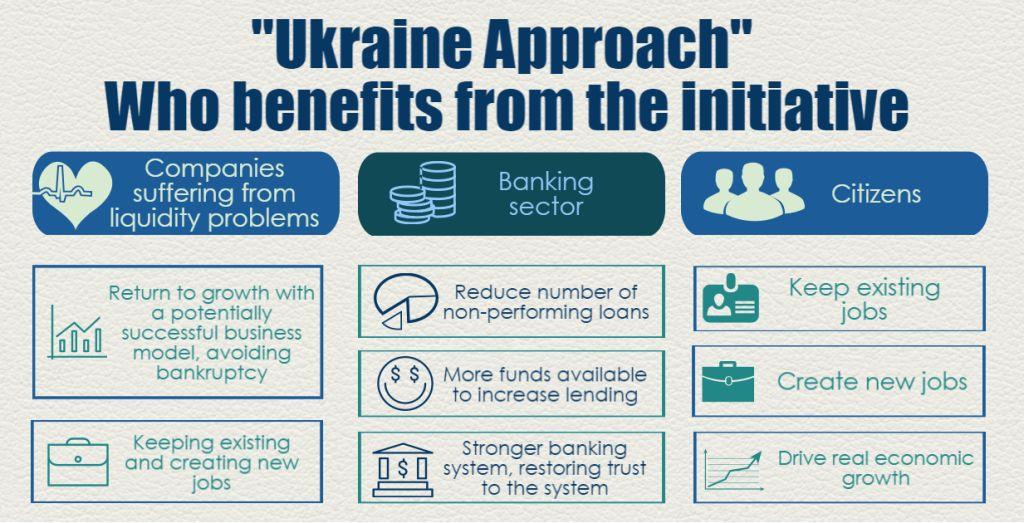
The Cabinet of Ministers of Ukraine has approved a legislation package meant to support citizens and companies which took loans in hard currency. The package also includes the draft law «On financial restructuring» and «On the restructuring of the liabilities of citizens of Ukraine under loans in hard currency which were taken to purchase a single residential property (mortgage loans)». The two laws were elaborated by the Ministry of Finance jointly with the National Bank of Ukraine and the Independent Association of Ukrainian Banks.
The Ministry of Finance is actively working to resume the economic growth of Ukraine and is taking steps to restore the loan supply of the Ukrainian economy as well as to tackle the debt burden on citizens and businesses in Ukraine.
One of the problems hindering the recovery of a dynamic economic growth in Ukraine is the inaccessibility loans for the economy which is due to a big number of bad loans preventing banks from funding new projects. The other side of this problem is the excessive debt burden on companies and citizens which is the result of the economic crisis, lost international markets or the devaluation of the Ukrainian currency.
One of the main issues for many Ukrainian families are their mortgage loans in hard currency taken before the crisis of 2008. And a major problem for many viable companies which are diligent debtors is their current lack of liquidity resulting in their inability to serve their debt or to take new loans. As a result, many businesses are now on the verge of bankruptcy, which can lead to the increase of unemployment and further deteriorate the economic situation in the country.
That is why the Ministry of Finance jointly with the National Bank has been looking for a solution to the issue of the bad debts of citizens and businesses. Today, at the Government’s meeting, Minister of finance Natalie Jaresko has presented draft laws aimed to effectively resolve these problems.
Presenting the draft law «On the restructuring of the liabilities of citizens of Ukraine under loans in hard currency which were taken to purchase a single residential property (mortgage loans)» at the Government’s meeting, Natalie Jaresko emphasized that this draft law is in position to solve the problem of the mortgage loans in hard currency in a fair way for the most vulnerable citizens.
«We think that the hard currency loans should be restructured only for citizens who took them to buy residential property for their own needs and can lose it now due to their inability to re-pay the loans. This is the only fair solution for the rest of the citizens most of whom did not take any loans and lived on their own income», Natalie Jaresko said.
There are approximately 37000 households in Ukraine entitled for restructuring. Their pending loans amount more than UAH 20bln. The approved draft law poses no danger for the banking system: it is agreed with the 19 biggest banks in Ukraine which own 75% of the assets in the Ukrainian banking system.
One more presented draft law - «On financial restructuring» - is aimed to settle the issue of the excessive debt burden on viable companies and thus to return them to business as well as to boost banking loans for the economy.
«The approach of this draft law can give companies with an effective and potentially successful business model an opportunity to solve their solvency problems, to avoid bankruptcy and thus to return to growth», Natalie Jaresko said.
However, this draft law cannot be misused to dodge payments on loans. To avoid the abuse and manipulation of the law, affiliated parties of debtors will not have a possibility to influence the restructuring process. Companies which are not viable, won’t be able to enjoy this law either.
Next week the legislation package will be submitted to the Parliament for examination and discussion.