Ministry of Finance and Ministry of Education met with business to discuss funding strategy for vocational education
-
About Ministry
- Recruitment
-
Accountable agencies
-
State Enterprises and Institutions Belonging to the Sphere of Management of the Ministry
- State enterprise "Management for the operation of the property complex"
- SERVICE AND PUBLISHING CENTR
- Central Treasury sample control enterprise
- Eastern state-owned enterprise of sampling control
- Western state-owned enterprise screening control
- Southern state enterprise of sampling control
- Dnipropetrovsk state-owned enterprise of sampling control
- State enterprise Kyiv offset factory
- State Service for Financial Monitoring
- State Treasury
- The State Audit Service of Ukraine
- State Tax Service of Ukraine
- State Customs Service of Ukraine
- Personnel Audit Procedures of State Customs Service
- State Tax University
-
State Enterprises and Institutions Belonging to the Sphere of Management of the Ministry
- Minfin Panel
-
Policy Issues
-
Budget policy
- Budget
- Transparent Budget
- BudgetPRO Project - Budget Policy
- Tax Policy
-
Customs Policy
-
Integration of customs legislation into EU law
- Direct and indirect customs representation: possible scenarios for declaring goods and the role of a customs broker
- Customs representative and customs holder: who submits and signs documents
- Confirmation of the reliability of credentials for obtaining authorizations
- Authorization to carry out customs brokerage activities
- Integration of customs IT systems to MASP-C
- Draft of the new Customs Code of Ukraine
- Survey for citizens and businesses
-
Integration of customs legislation into EU law
-
Accounting and Auditing
-
Accounting
-
Introduction of International Financial Reporting Standards
- Translation of International Financial Reporting Standards 2026
- Translation of International Financial Reporting Standards 2025
- Translation of international financial reporting standards of 2024
- Translation of international financial reporting standards of 2023
- Archive of translations
- Taxonomy
- Translation of technical publications
- General Clarifications (filled in after the preparation of the relevant letters of explanation)
- Strategy for applying international financial reporting standards
- Accounting in Private Sector
- Accounting in the Public Sector
- Methodological Accounting Council under the Ministry of Finance of Ukraine (download a short description)
- IFRS Council under the Ministry of Finance of Ukraine (download a short description)
-
Introduction of International Financial Reporting Standards
- Auditing
- Sustainability reporting
-
Accounting
-
Debt policy
- Overview
- Debt News
- Debt Statistics
- Domestic Bonds
- Primary Dealers
- Eurobonds
- Credit Rating
- Investor Relations
- DMO Awards
- Anti-money laundering policy (AML)
- Financial Policy
- National revenue strategy
-
International Cooperation
-
Partners
- EU
- International Monetary Fund
-
Cooperation in Attracting Financing from the International Financial Institutions
- Development Bank of the Council of Europe
- Procedure for attracting funds of International Financial Institutions
- World Bank
- EBRD
- EIB
- Deutsche Gesellschaft für Internationale Zusammenarbeit (GIZ) GmbH
- KFW
- Register of Joint IFIs Projects at the Stage of Preparation and Implementation (information)
- International Technical Assistance (within the competence of the Ministry of Finance)
- Monitoring of international technical assistance projects
- Cooperation with the Development Partners
- Ukraine Donor Platform
-
Partners
- International Tax Relations
- Development of Public Internal Financial Control (PIFC)
-
Public investment management
- Regulatory documents
- Implementation of the roadmap for reforming the management of public investments
- Interdepartmental Commission on the Distribution of Public Investments
- Unified portfolio of public investment projects (list of priority public investment projects)
- Interdepartmental working group on reforming the public investment management system
- Reference information
-
Other Areas of Public Policy
- Internal Audit
- Audit Committee of the Ministry of Finance of Ukraine
- Scientific and scientific and technical activity
- Reform Support Team at the Ministry of Finance of Ukraine
- Verification of State Social Payments
-
Fiscal Risks Managament
- Clarifications
- Legislation on Fiscal Risks Management
- List of Economic Entities with which Major Fiscal Risks May Be Related
- Reports
- List of business entities to which the Ministry of Finance approves proposals for individual financial indicators for the planning period, as well as proposals for maximum thresholds for the volume of capital investments
- Operations with precious stones and metals
- Licensing
- Public Finance Management Strategy (PFMS)
- Strategic Plan
-
Key Spending Unit - Ministry of Finance
- Budget Requests
- Passports of Budget Programs
- Evaluation of the Effectiveness of Budget Programs
- Procurement Reports
- Reports on the implementation of public investment projects
- Budget Information
- Information on the effectiveness of the use of public funds
- The structure and volume of budget funds under budget programs
- Cash Management
- Programs
-
Budget policy
-
Legislation
-
Regulatory Activity
- Regulatory Performance Tracking Reports 2026
- Activity plan of the Ministry of Finance of Ukraine for the preparation of draft regulatory acts in 2026.
- Schedule of measures in 2026 to track the effectiveness of regulatory acts of the Ministry of Finance of Ukraine
- Reports on tracking the effectiveness of regulatory acts in 2025.
- Activity plan of the Ministry of Finance of Ukraine for project preparation regulatory acts in 2025
- Plan-schedule of implementation of measures in 2025 regarding performance tracking regulatory acts of the Ministry of Finance of Ukraine
- reports_on_the_effectiveness_of_regulatory_acts_2024
- The activity plan for the preparation of the regulatory acts draft 2024
- Schedule of measures to monitor the effectiveness of regulatory acts 2024
- reports_on_the_effectiveness_of_regulatory_acts_2023
- The activity plan for the preparation of the regulatory acts draft 2022
- Schedule of measures to monitor the effectiveness of regulatory acts 2023
- Reports on the effectiveness of regulatory acts 2022
- The activity plan for the preparation of the regulatory acts draft 2022
- Schedule of measures to monitor the effectiveness of regulatory acts 2022
- Reports on the effectiveness of regulatory acts 2020
- The activity plan for the preparation of the regulatory acts draft 2021
- Schedule of measures to monitor the effectiveness of regulatory acts 2021
- Reports on the effectiveness of regulatory acts 2020
- The activity plan for the preparation of the regulatory acts draft 2020
- Schedule of measures to monitor the effectiveness of regulatory acts 2020
- Reports on the effectiveness of regulatory acts 2019
- The activity plan for the preparation of the regulatory acts draft 2019
- Schedule of measures to monitor the effectiveness of regulatory acts 2019
- Reports on the effectiveness of regulatory acts 2018
- The activity plan for the preparation of the regulatory acts draft 2018
- Schedule of measures to monitor the effectiveness of regulatory acts 2018
- Reports on the effectiveness of regulatory acts 2017
- The activity plan for the preparation of the regulatory acts draft 2017
- Schedule of measures to monitor the effectiveness of regulatory acts 2017
- Reports on the effectiveness of regulatory acts 2016
- The activity plan for the preparation of the regulatory acts draft 2016
- Schedule of measures to monitor the effectiveness of regulatory acts 2016
- Reports on the effectiveness of regulatory acts 2015
- The activity plan for the preparation of the regulatory acts draft 2015
-
Draft Regulatory Acts Discussion
- Draft regulatory acts for discussion in 2026
- Draft regulatory acts for discussion in 2025.
- Regulatory acts draft for discussion 2024
- Regulatory acts draft for discussion 2023
- Regulatory acts draft for discussion 2022
- Regulatory acts draft for discussion 2021
- Regulatory acts draft for discussion 2020
- Regulatory acts draft for discussion 2019
- Regulatory acts draft for discussion 2018
- Regulatory acts draft for discussion 2017
- Regulatory acts draft for discussion 2016
- Regulatory acts draft for discussion 2015
-
Draft Legislation
- Draft regulatory legal acts in 2026
- Draft normative legal acts in 2025.
- Legal acts drafts 2024
- Legal acts drafts 2023
- Legal acts drafts 2022
- Legal acts drafts 2021
- Legal acts drafts 2020
- Legal acts drafts 2019
- Legal acts drafts 2018
- Legal acts drafts 2017
- Legal acts drafts 2016
- Legal acts drafts 2015
-
Regulatory Activity
-
Data
- Cooperation with Civil Society
- Press Center
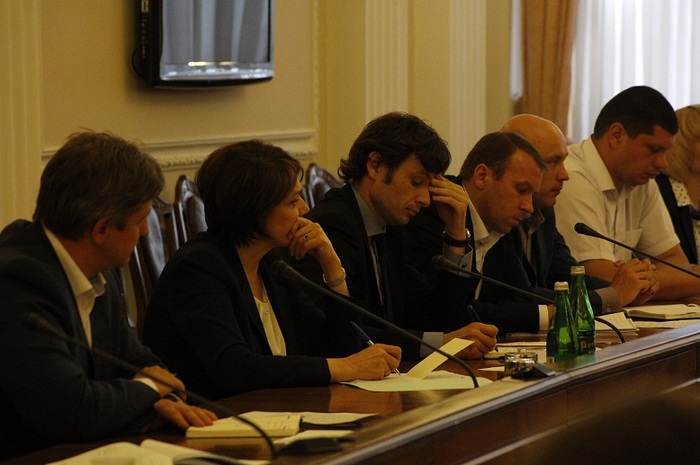
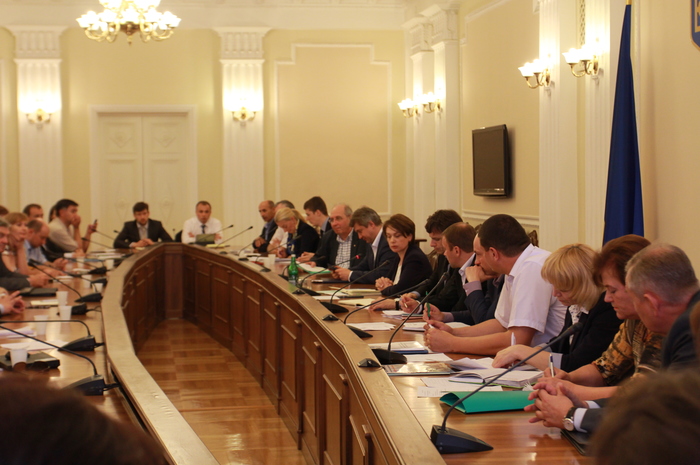
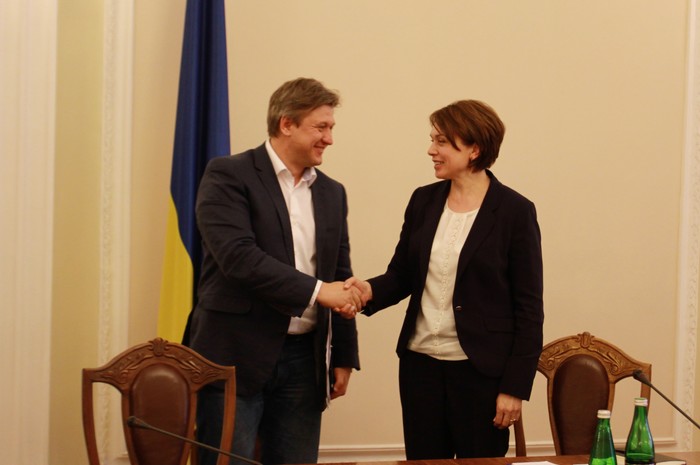
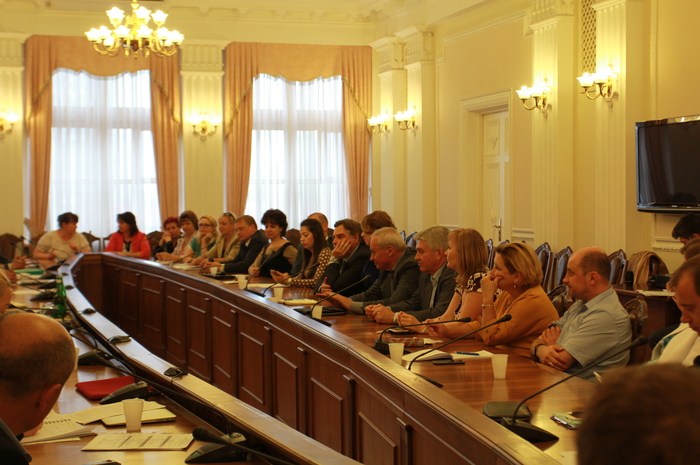
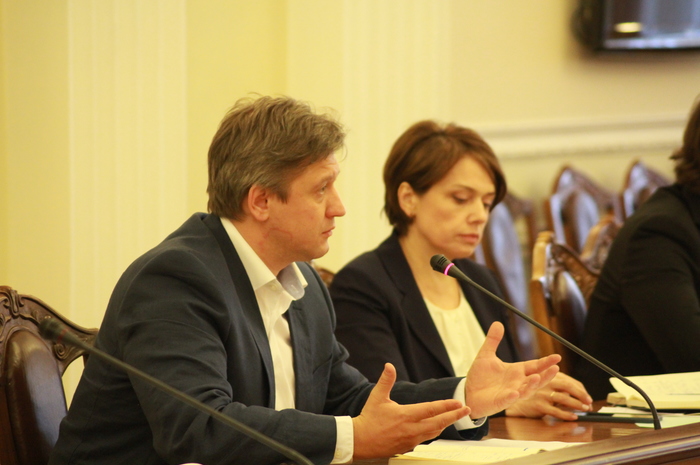
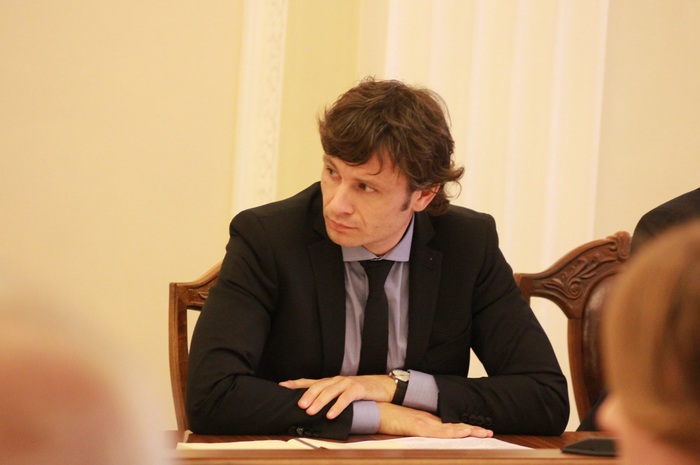
Minister of Finance Oleksandr Danyliuk and Minister of Education Lilyia Grynevych, Deputy Minister of Finance Sergii Marchenko, and Deputy Minister of Education Pavlo Khobzey including Program Manager of the European Training Foundation Margareta Nikolovska held a joint meeting with representatives of business associations and large employer companies aiming to elaborate common strategy to funding vocational schools. The meeting was attended by representatives of more than 30 companies from the agriculture, metallurgy, energy, telecommunications and other sectors.
The Ministry of Finance cooperates closely with the Ministry of Education on decentralization of educational system and financing issues of vocational schools which helps to enhance the quality of education and, as a result, to prepare competitive and highly qualified workforce.
Today there is a paradoxical situation when graduates cannot find jobs while labor market suffers from a decrease of qualified workers. During the meeting new possibilities to funding technical schools at the local level were discussed which involve major employers whose experience is based on the best EU practices.
Minister Oleksandr Danyliuk stated that the financing of vocational schools which local budgets cannot provide, makes up 1.2 billion UAH. However, the experience of European countries shows that state budget is not the only source to fund vocational schools.
In countries with successful reform of technical education, representatives of educational institutions, local authorities, business and industry hold an active dialogue. “The establishment of the modern system for education of highly qualified workforce which would require no extra costs for retraining right after graduation, lies in the interests of employers. Therefore, the participation of employers in co-financing of vocational schools may be the best approach to solve funding issues of vocational education. We realize that government should make step towards those companies which support this initiative”, Oleksandr Danyliuk said.
Minister of Education Lilyia Grynevych suggested to strengthen efforts of the Ministries and employers in order to design an optimized system of vocational education and to avoid duplication of functions, or creation of parallel systems of education. "The fundamental issue for us in frame of vocational education is to preserve state funding for the secondary education. It's a different matter that additional funding of vocational component may include state programs, regional order (from regions and cities) or branch order (institutions, enterprises, companies). At present time regional state administrations have to submit to the Ministry of Education its development plans regarding vocational education. Therefore, we will be able to analize general picture and to take a decision regarding optimization of this network as well as to omit duplication of specialties", Minister of Education Liliya Hrynevych stated.
Program Manager of the European Training Foundation Margareta Nikolovska added that underfunding of vocational education creates problem which needs time and involvement of different stakeholders. "Creation of the dialogue between companies and educational system is necessary because this cooperation leads to the development of both citizens and country", Margareta Nikolovska said.
The representatives of the companies also noted a number of systematic issues in vocational education, in particular, imbalance in volumes and educational directions and economic needs, labour market, lack of standards and criteria of professional education that would ensure highly qualified workforce and satisfy employer’s demands. Generally business representatives stated about the necessity to consider the efficiency of workforce education at present difficult economic situation and expressed their willingness to support vocational education and cooperate with state bodies and local authorities.