Olga Zykova: Ukraine’s recovery continues – even in wartime, we are laying the foundation for a new economic growth model
-
About Ministry
- Recruitment
-
Accountable agencies
-
State Enterprises and Institutions Belonging to the Sphere of Management of the Ministry
- State enterprise "Management for the operation of the property complex"
- SERVICE AND PUBLISHING CENTR
- Central Treasury sample control enterprise
- Eastern state-owned enterprise of sampling control
- Western state-owned enterprise screening control
- Southern state enterprise of sampling control
- Dnipropetrovsk state-owned enterprise of sampling control
- State enterprise Kyiv offset factory
- State Service for Financial Monitoring
- State Treasury
- The State Audit Service of Ukraine
- State Tax Service of Ukraine
- State Customs Service of Ukraine
- Personnel Audit Procedures of State Customs Service
- State Tax University
-
State Enterprises and Institutions Belonging to the Sphere of Management of the Ministry
- Minfin Panel
-
Policy Issues
- Budget policy
- Tax Policy
-
Customs Policy
-
Integration of customs legislation into EU law
- Direct and indirect customs representation: possible scenarios for declaring goods and the role of a customs broker
- Customs representative and customs holder: who submits and signs documents
- Confirmation of the reliability of credentials for obtaining authorizations
- Authorization to carry out customs brokerage activities
- Integration of customs IT systems to MASP-C
-
Integration of customs legislation into EU law
-
Accounting and Auditing
-
Accounting
-
Introduction of International Financial Reporting Standards
- Translation of International Financial Reporting Standards 2025
- Translation of international financial reporting standards of 2024
- Translation of international financial reporting standards of 2023
- Archive of translations
- Taxonomy
- Translation of technical publications
- General Clarifications (filled in after the preparation of the relevant letters of explanation)
- Accounting in Private Sector
- Accounting in the Public Sector
- Methodological Accounting Council under the Ministry of Finance of Ukraine (download a short description)
- IFRS Council under the Ministry of Finance of Ukraine (download a short description)
-
Introduction of International Financial Reporting Standards
- Auditing
- Sustainability reporting
-
Accounting
-
Debt policy
- Overview
- Debt News
- Debt Statistics
- Domestic Bonds
- Primary Dealers
- Eurobonds
- Credit Rating
- Investor Relations
- DMO Awards
- Anti-money laundering policy (AML)
- Financial Policy
- National revenue strategy
-
International Cooperation
-
Partners
- EU
- International Monetary Fund
-
Cooperation in Attracting Financing from the International Financial Institutions
- Development Bank of the Council of Europe
- Procedure for attracting funds of International Financial Institutions
- World Bank
- EBRD
- EIB
- Deutsche Gesellschaft für Internationale Zusammenarbeit (GIZ) GmbH
- KFW
- Register of Joint IFIs Projects at the Stage of Preparation and Implementation (information)
- International Technical Assistance (within the competence of the Ministry of Finance)
- Monitoring of international technical assistance projects
- Cooperation with the Development Partners
- Ukraine Donor Platform
-
Partners
- International Tax Relations
- Development of Public Internal Financial Control (PIFC)
-
Public investment management
- Regulatory documents
- Implementation of the roadmap for reforming the management of public investments
- Interdepartmental Commission on the Distribution of Public Investments
- Unified portfolio of public investment projects (list of priority public investment projects)
- Interdepartmental working group on reforming the public investment management system
- Reference information
-
Other Areas of Public Policy
- Internal Audit
- Audit Committee of the Ministry of Finance of Ukraine
- Scientific and scientific and technical activity
- Reform Support Team at the Ministry of Finance of Ukraine
- Verification of State Social Payments
-
Fiscal Risks Managament
- Clarifications
- Legislation on Fiscal Risks Management
- List of Economic Entities with which Major Fiscal Risks May Be Related
- Reports
- List of business entities to which the Ministry of Finance approves proposals for individual financial indicators for the planning period, as well as proposals for maximum thresholds for the volume of capital investments
- Operations with precious stones and metals
- Licensing
- Public Finance Management Strategy (PFMS)
- Strategic Plan
-
Key Spending Unit - Ministry of Finance
- Budget Requests
- Passports of Budget Programs
- Evaluation of the Effectiveness of Budget Programs
- Procurement Reports
- Reports on the implementation of public investment projects
- Budget Information
- Information on the effectiveness of the use of public funds
- The structure and volume of budget funds under budget programs
- Cash Management
- Programs
-
Legislation
-
Regulatory Activity
- Regulatory Performance Tracking Reports 2026
- Activity plan of the Ministry of Finance of Ukraine for the preparation of draft regulatory acts in 2026.
- Schedule of measures in 2026 to track the effectiveness of regulatory acts of the Ministry of Finance of Ukraine
- Reports on tracking the effectiveness of regulatory acts in 2025.
- Activity plan of the Ministry of Finance of Ukraine for project preparation regulatory acts in 2025
- Plan-schedule of implementation of measures in 2025 regarding performance tracking regulatory acts of the Ministry of Finance of Ukraine
- reports_on_the_effectiveness_of_regulatory_acts_2024
- The activity plan for the preparation of the regulatory acts draft 2024
- Schedule of measures to monitor the effectiveness of regulatory acts 2024
- reports_on_the_effectiveness_of_regulatory_acts_2023
- The activity plan for the preparation of the regulatory acts draft 2022
- Schedule of measures to monitor the effectiveness of regulatory acts 2023
- Reports on the effectiveness of regulatory acts 2022
- The activity plan for the preparation of the regulatory acts draft 2022
- Schedule of measures to monitor the effectiveness of regulatory acts 2022
- Reports on the effectiveness of regulatory acts 2020
- The activity plan for the preparation of the regulatory acts draft 2021
- Schedule of measures to monitor the effectiveness of regulatory acts 2021
- Reports on the effectiveness of regulatory acts 2020
- The activity plan for the preparation of the regulatory acts draft 2020
- Schedule of measures to monitor the effectiveness of regulatory acts 2020
- Reports on the effectiveness of regulatory acts 2019
- The activity plan for the preparation of the regulatory acts draft 2019
- Schedule of measures to monitor the effectiveness of regulatory acts 2019
- Reports on the effectiveness of regulatory acts 2018
- The activity plan for the preparation of the regulatory acts draft 2018
- Schedule of measures to monitor the effectiveness of regulatory acts 2018
- Reports on the effectiveness of regulatory acts 2017
- The activity plan for the preparation of the regulatory acts draft 2017
- Schedule of measures to monitor the effectiveness of regulatory acts 2017
- Reports on the effectiveness of regulatory acts 2016
- The activity plan for the preparation of the regulatory acts draft 2016
- Schedule of measures to monitor the effectiveness of regulatory acts 2016
- Reports on the effectiveness of regulatory acts 2015
- The activity plan for the preparation of the regulatory acts draft 2015
-
Draft Regulatory Acts Discussion
- Draft regulatory acts for discussion in 2026
- Draft regulatory acts for discussion in 2025.
- Regulatory acts draft for discussion 2024
- Regulatory acts draft for discussion 2023
- Regulatory acts draft for discussion 2022
- Regulatory acts draft for discussion 2021
- Regulatory acts draft for discussion 2020
- Regulatory acts draft for discussion 2019
- Regulatory acts draft for discussion 2018
- Regulatory acts draft for discussion 2017
- Regulatory acts draft for discussion 2016
- Regulatory acts draft for discussion 2015
-
Draft Legislation
- Draft regulatory legal acts in 2026
- Draft normative legal acts in 2025.
- Legal acts drafts 2024
- Legal acts drafts 2023
- Legal acts drafts 2022
- Legal acts drafts 2021
- Legal acts drafts 2020
- Legal acts drafts 2019
- Legal acts drafts 2018
- Legal acts drafts 2017
- Legal acts drafts 2016
- Legal acts drafts 2015
-
Regulatory Activity
-
Data
- Cooperation with Civil Society
- Press Center
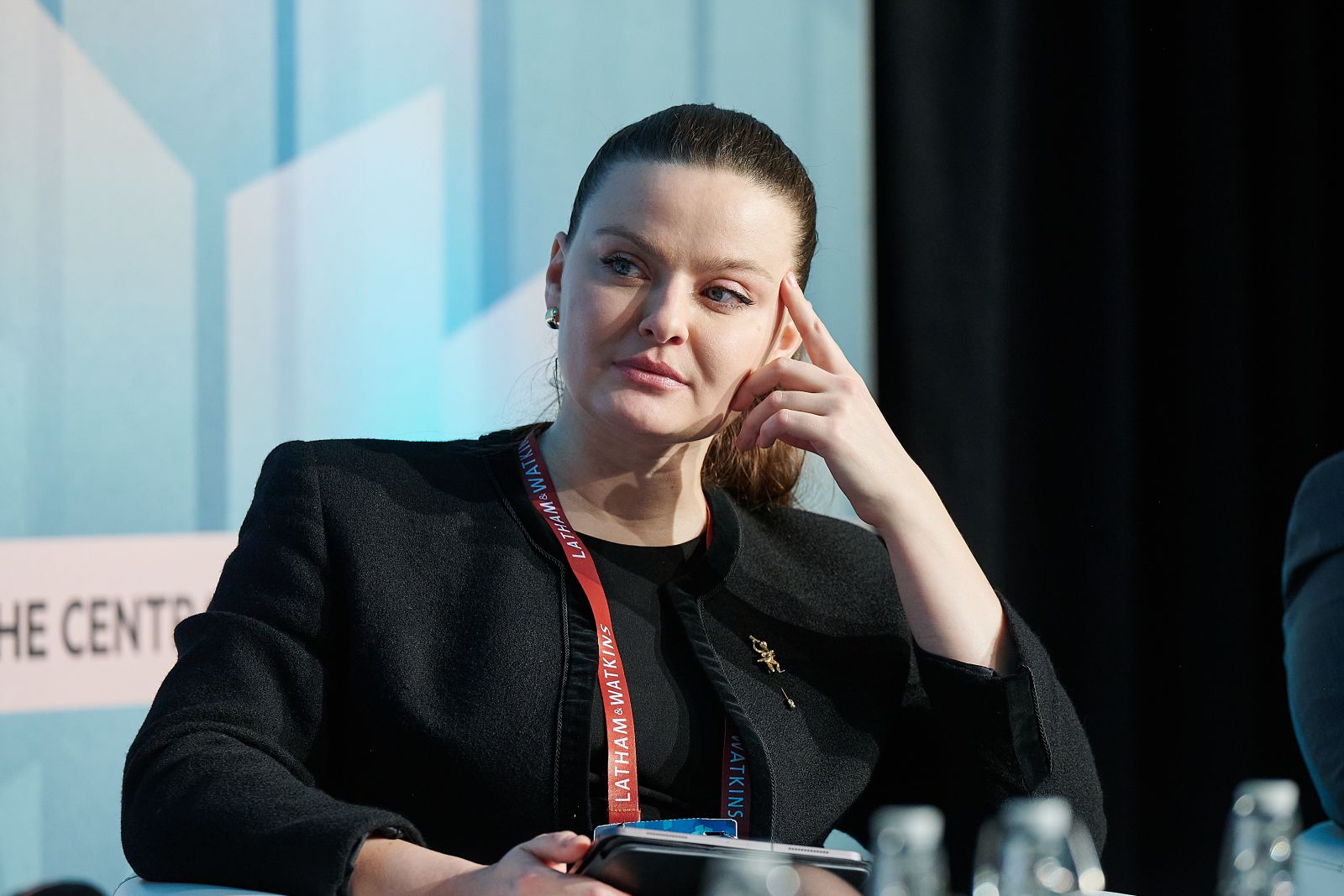
Deputy Minister of Finance of Ukraine Olga Zykova presented the Government’s vision regarding the current stage of recovery, key financial challenges, the role of international partners, and Ukraine’s long-term economic transformation.
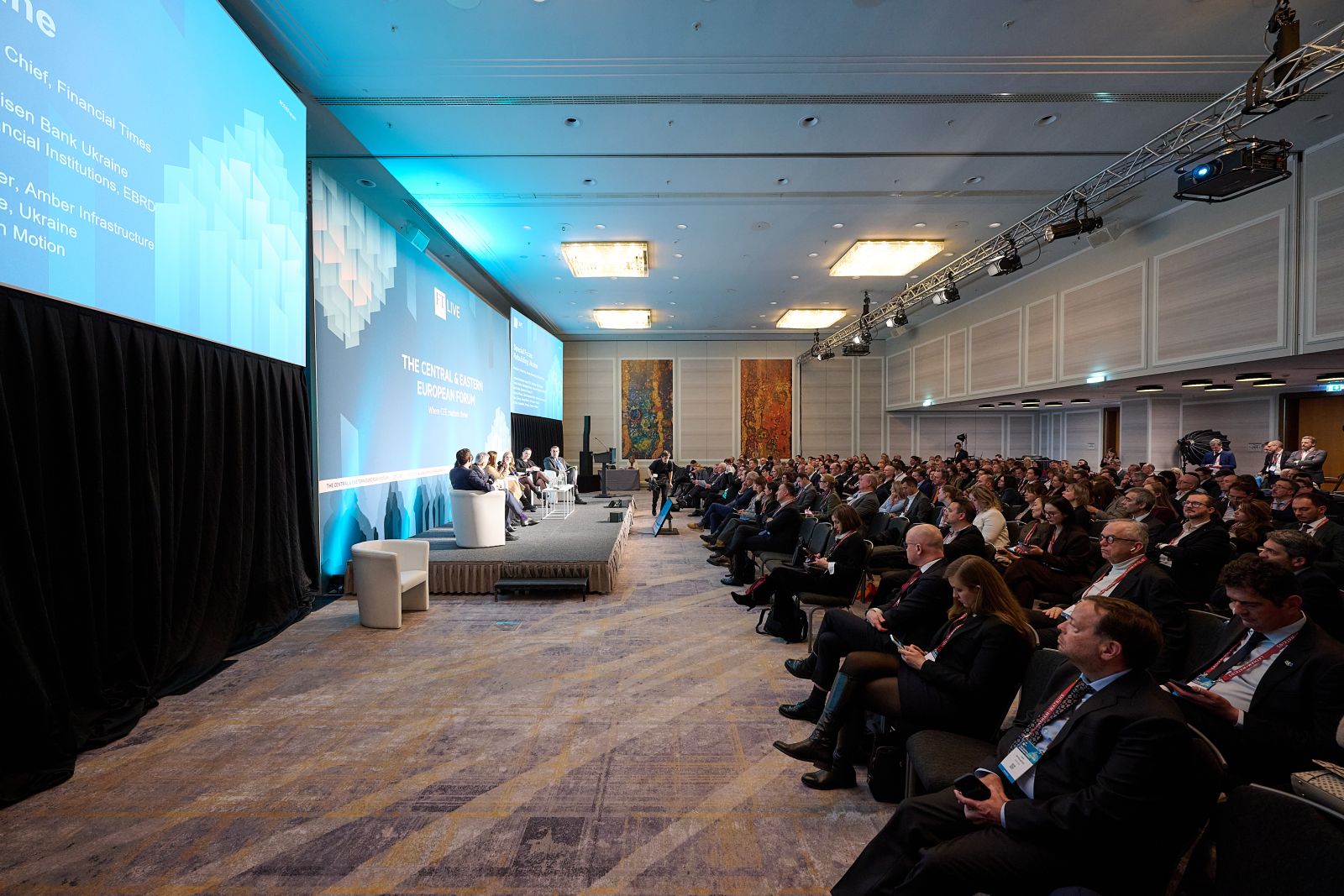
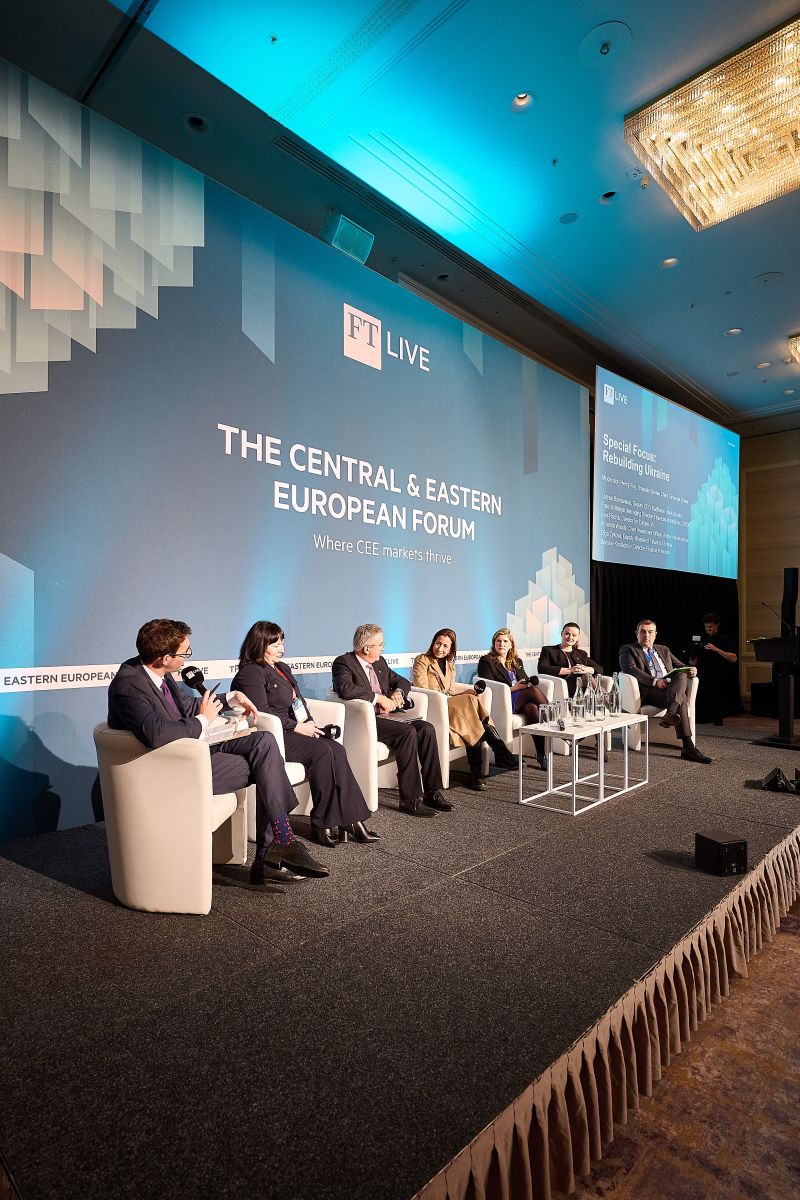
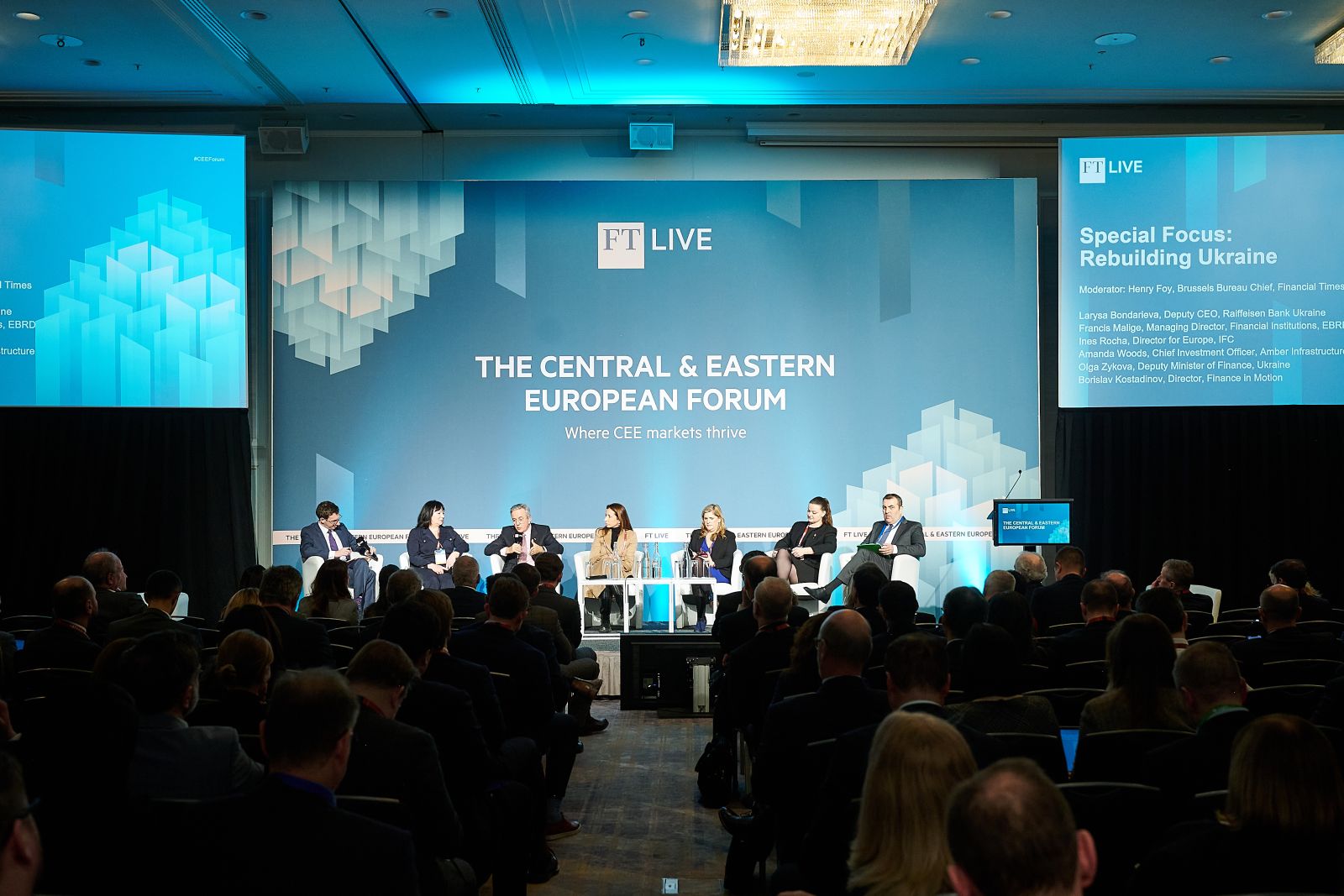
Olga Zykova spoke during the panel discussion “Special Focus: Rebuilding Ukraine” at the Central & Eastern European Forum 2025 in Vienna.
According to her, nearly four years of the full-scale war launched by russia in February 2022 have caused significant damage to Ukraine’s infrastructure, economy, and society. According to the latest Rapid Damage and Needs Assessment (RDNA4), conducted by the Government of Ukraine jointly with the World Bank, the United Nations, and the European Union, total damages amount to USD 176 billion, while recovery needs are estimated at USD 524 billion over the next ten years. An updated RDNA5 assessment will be published in February 2026 and will reflect the situation as of the end of 2025.
Olga Zykova emphasized that Ukraine’s financial resilience since the beginning of the full-scale invasion has been ensured by a broad coalition of international partners. Total budget support since 2022 has already exceeded USD 167.6 billion, including USD 52.4 billion provided by partners in 2025 alone.
“The IMF program, the World Bank’s Development Policy Financing, the EU’s Ukraine Facility, G7 countries, and other international partners have provided critically important budget financing, conditional on the implementation of structural reforms, and used by the Government of Ukraine to deliver those reforms. At the same time, the International Finance Corporation (IFC), the European Bank for Reconstruction and Development (EBRD), and other development partners have ensured an inflow of investment into the private sector even during the war and supported preparation for post-war reconstruction, helping companies survive, expand their operations, and preserve jobs,” Olga Zykova noted.
She also highlighted the evolution of cooperation with international financial institutions, which have demonstrated flexibility and the ability to adapt support instruments to wartime conditions.
According to Olga Zykova, the Government of Ukraine has a structured vision for reconstruction — from supporting the state’s core functions and laying the foundation for key structural reforms, including within IMF and EU programs, to modernizing the economy with a focus on private investment as a key driver of long-term growth.
Regarding the 2026 budget priorities, the Deputy Minister of Finance stressed that the country continues to operate under a harsh wartime fiscal reality: over 60% of the budget is allocated to security and defense. At the same time, despite ongoing security threats, the Government maintains a clear focus on recovery. Key funding priorities include the housing sector (nearly USD 1.1 billion in the 2026 state budget), economic support (around USD 1.2 billion), infrastructure projects (USD 950 million), as well as energy and energy efficiency (USD 310 million).
A major challenge remains aligning donor funding with the actual needs of the budget. According to Olga Zykova, the issue lies not only in the volume of resources but also in three key imbalances: timing (not always predictable or timely inflows), instruments (the need to mobilize financing without exceeding a safe debt threshold and while preserving debt sustainability), and institutional capacity (a mismatch between donor requirements and the implementation capacity of institutions and communities).
“Our task is not just to mobilize funds, but to ensure they arrive on time, in the right form, and contribute to economic transformation rather than merely restoring what has been destroyed,” she emphasized.
Currently, the Government of Ukraine is shaping a new economic model for recovery based on the rule of law, transparency, effective corporate governance, and the private sector as the main engine of growth.
“Ukraine’s recovery is a process that will span decades. Its uniqueness lies in the fact that reconstruction is already underway during the war, meaning that once it ends, the country will not start from scratch but will have a solid foundation built on implemented reforms and achieved financial resilience,” Olga Zykova stressed.