Від ефективної побудови бізнес-процесів усередині ДФС залежить успіх її реформи – Радник міністра фінансів Яна Бугрімова
-
About Ministry
- Recruitment
-
Accountable agencies
-
State Enterprises and Institutions Belonging to the Sphere of Management of the Ministry
- State enterprise "Management for the operation of the property complex"
- SERVICE AND PUBLISHING CENTR
- Central Treasury sample control enterprise
- Eastern state-owned enterprise of sampling control
- Western state-owned enterprise screening control
- Southern state enterprise of sampling control
- Dnipropetrovsk state-owned enterprise of sampling control
- State enterprise Kyiv offset factory
- State Service for Financial Monitoring
- State Treasury
- The State Audit Service of Ukraine
- State Tax Service of Ukraine
- State Customs Service of Ukraine
- Personnel Audit Procedures of State Customs Service
- State Tax University
-
State Enterprises and Institutions Belonging to the Sphere of Management of the Ministry
- Minfin Panel
-
Policy Issues
-
Budget policy
- Budget
- Transparent Budget
- BudgetPRO Project - Budget Policy
- Tax Policy
-
Customs Policy
-
Integration of customs legislation into EU law
- Direct and indirect customs representation: possible scenarios for declaring goods and the role of a customs broker
- Customs representative and customs holder: who submits and signs documents
- Confirmation of the reliability of credentials for obtaining authorizations
- Authorization to carry out customs brokerage activities
- Integration of customs IT systems to MASP-C
- Draft of the new Customs Code of Ukraine
- Survey for citizens and businesses
-
Integration of customs legislation into EU law
-
Accounting and Auditing
-
Accounting
-
Introduction of International Financial Reporting Standards
- Translation of International Financial Reporting Standards 2026
- Translation of International Financial Reporting Standards 2025
- Translation of international financial reporting standards of 2024
- Translation of international financial reporting standards of 2023
- Archive of translations
- Taxonomy
- Translation of technical publications
- General Clarifications (filled in after the preparation of the relevant letters of explanation)
- Strategy for applying international financial reporting standards
- Accounting in Private Sector
- Accounting in the Public Sector
- Methodological Accounting Council under the Ministry of Finance of Ukraine (download a short description)
- IFRS Council under the Ministry of Finance of Ukraine (download a short description)
-
Introduction of International Financial Reporting Standards
- Auditing
- Sustainability reporting
-
Accounting
-
Debt policy
- Overview
- Debt News
- Debt Statistics
- Domestic Bonds
- Primary Dealers
- Eurobonds
- Credit Rating
- Investor Relations
- DMO Awards
- Anti-money laundering policy (AML)
- Financial Policy
- National revenue strategy
-
International Cooperation
-
Partners
- EU
- International Monetary Fund
-
Cooperation in Attracting Financing from the International Financial Institutions
- Development Bank of the Council of Europe
- Procedure for attracting funds of International Financial Institutions
- World Bank
- EBRD
- EIB
- Deutsche Gesellschaft für Internationale Zusammenarbeit (GIZ) GmbH
- KFW
- Register of Joint IFIs Projects at the Stage of Preparation and Implementation (information)
- International Technical Assistance (within the competence of the Ministry of Finance)
- Monitoring of international technical assistance projects
- Cooperation with the Development Partners
- Ukraine Donor Platform
-
Partners
- International Tax Relations
- Development of Public Internal Financial Control (PIFC)
-
Public investment management
- Regulatory documents
- Implementation of the roadmap for reforming the management of public investments
- Interdepartmental Commission on the Distribution of Public Investments
- Unified portfolio of public investment projects (list of priority public investment projects)
- Interdepartmental working group on reforming the public investment management system
- Reference information
-
Other Areas of Public Policy
- Internal Audit
- Audit Committee of the Ministry of Finance of Ukraine
- Scientific and scientific and technical activity
- Reform Support Team at the Ministry of Finance of Ukraine
- Verification of State Social Payments
-
Fiscal Risks Managament
- Clarifications
- Legislation on Fiscal Risks Management
- List of Economic Entities with which Major Fiscal Risks May Be Related
- Reports
- List of business entities to which the Ministry of Finance approves proposals for individual financial indicators for the planning period, as well as proposals for maximum thresholds for the volume of capital investments
- Operations with precious stones and metals
- Licensing
- Public Finance Management Strategy (PFMS)
- Strategic Plan
-
Key Spending Unit - Ministry of Finance
- Budget Requests
- Passports of Budget Programs
- Evaluation of the Effectiveness of Budget Programs
- Procurement Reports
- Reports on the implementation of public investment projects
- Budget Information
- Information on the effectiveness of the use of public funds
- The structure and volume of budget funds under budget programs
- Cash Management
- Programs
-
Budget policy
-
Legislation
-
Regulatory Activity
- Regulatory Performance Tracking Reports 2026
- Activity plan of the Ministry of Finance of Ukraine for the preparation of draft regulatory acts in 2026.
- Schedule of measures in 2026 to track the effectiveness of regulatory acts of the Ministry of Finance of Ukraine
- Reports on tracking the effectiveness of regulatory acts in 2025.
- Activity plan of the Ministry of Finance of Ukraine for project preparation regulatory acts in 2025
- Plan-schedule of implementation of measures in 2025 regarding performance tracking regulatory acts of the Ministry of Finance of Ukraine
- reports_on_the_effectiveness_of_regulatory_acts_2024
- The activity plan for the preparation of the regulatory acts draft 2024
- Schedule of measures to monitor the effectiveness of regulatory acts 2024
- reports_on_the_effectiveness_of_regulatory_acts_2023
- The activity plan for the preparation of the regulatory acts draft 2022
- Schedule of measures to monitor the effectiveness of regulatory acts 2023
- Reports on the effectiveness of regulatory acts 2022
- The activity plan for the preparation of the regulatory acts draft 2022
- Schedule of measures to monitor the effectiveness of regulatory acts 2022
- Reports on the effectiveness of regulatory acts 2020
- The activity plan for the preparation of the regulatory acts draft 2021
- Schedule of measures to monitor the effectiveness of regulatory acts 2021
- Reports on the effectiveness of regulatory acts 2020
- The activity plan for the preparation of the regulatory acts draft 2020
- Schedule of measures to monitor the effectiveness of regulatory acts 2020
- Reports on the effectiveness of regulatory acts 2019
- The activity plan for the preparation of the regulatory acts draft 2019
- Schedule of measures to monitor the effectiveness of regulatory acts 2019
- Reports on the effectiveness of regulatory acts 2018
- The activity plan for the preparation of the regulatory acts draft 2018
- Schedule of measures to monitor the effectiveness of regulatory acts 2018
- Reports on the effectiveness of regulatory acts 2017
- The activity plan for the preparation of the regulatory acts draft 2017
- Schedule of measures to monitor the effectiveness of regulatory acts 2017
- Reports on the effectiveness of regulatory acts 2016
- The activity plan for the preparation of the regulatory acts draft 2016
- Schedule of measures to monitor the effectiveness of regulatory acts 2016
- Reports on the effectiveness of regulatory acts 2015
- The activity plan for the preparation of the regulatory acts draft 2015
-
Draft Regulatory Acts Discussion
- Draft regulatory acts for discussion in 2026
- Draft regulatory acts for discussion in 2025.
- Regulatory acts draft for discussion 2024
- Regulatory acts draft for discussion 2023
- Regulatory acts draft for discussion 2022
- Regulatory acts draft for discussion 2021
- Regulatory acts draft for discussion 2020
- Regulatory acts draft for discussion 2019
- Regulatory acts draft for discussion 2018
- Regulatory acts draft for discussion 2017
- Regulatory acts draft for discussion 2016
- Regulatory acts draft for discussion 2015
-
Draft Legislation
- Draft regulatory legal acts in 2026
- Draft normative legal acts in 2025.
- Legal acts drafts 2024
- Legal acts drafts 2023
- Legal acts drafts 2022
- Legal acts drafts 2021
- Legal acts drafts 2020
- Legal acts drafts 2019
- Legal acts drafts 2018
- Legal acts drafts 2017
- Legal acts drafts 2016
- Legal acts drafts 2015
-
Regulatory Activity
-
Data
- Cooperation with Civil Society
- Press Center
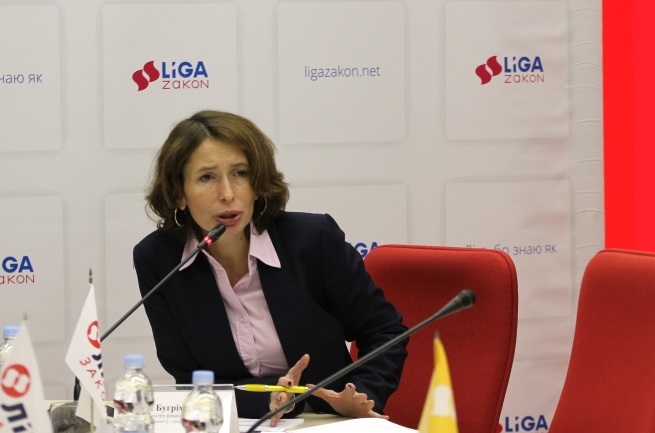

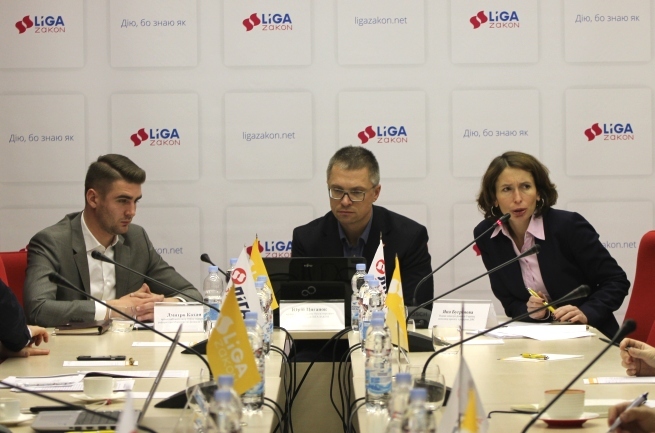
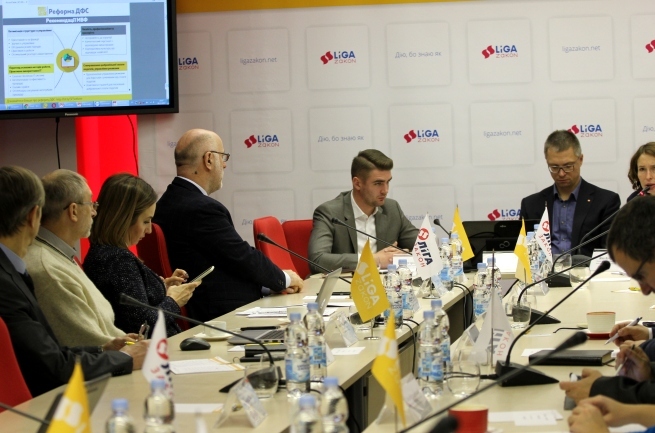
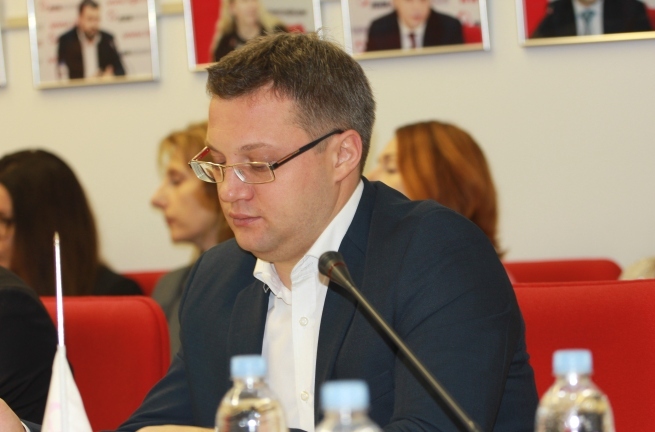
On December 6, 2017, the Ministry of Finance presented the project of the comprehensive reform of the State Fiscal Service (SFS) to the public, business and expert community during the round table at the press centre Liga Zakon. The participants discussed practical steps regarding the implementation of the priority initiatives for the SFS reform.
The action plan for the SFS reform is now being agreed between the Ministry of Finance and the SFS. The further steps – as per Yana Bugrimova, advisor to the Minister of Finance of Ukraine – include public hearings, approval by the Cabinet of Ministers and, the last but not least, the implementation of the action plan.
“The fact is that not all perfect components are available for the comprehensive SFS reform at the moment should in no case discourage from the implementation of concrete steps. One must be realistic; hence it is not possible to expect the whole personnel to be replaced within the next two years. The digitalization of the operational processes at the SFS does not only refer to technologies – it is also about transparency, reduced individual contacts with taxpayers as well as more accessibility and effectiveness, which are crucial objectices for any state agency”, Yana Bugrimova said.
The reform of the SFS is important both for business and for the state. According to Yana Bugrimova, the SFS reform has three key elements, which are:
Regulation. “One can say that the State Fiscal Service must be free from corruption. At the same time, the law shall regulate the working processes at the SFS in the way keeping opportunities for corruption as low as possible”, Yana Bugrimova stressed.
Personnel. “Any organization is about its people. Laws and procedures can be perfectly formulated, but if you have people with a different kind of motivation, nothing will happen. Changes in any organization must start from within. Hence, it is impossible to reform the SFS coming from the outside”, the advisor to the Minister of Finance explained.
Business processes. “The SFS is a complex organization with numerous business processes. The optimization of these business processes is often underestimated, when we talk about the SFS reform. Everything depends on effective business processes”, Yana Bugrimova said.
As an example, she said that only 4% of the SFS personnel handle tax debts, whereas the number of staff dedicated for this issue shall be 13% of the total personnel capacity. Another example is that the call centre of the SFS can only process 50% of the incoming calls. There are other examples making clear that the operational processes at the SFS as well as the personnel functions are designed ineffectively and affect the operation of the entire SFS.
Another point is that approx. 60% of the contacts between taxpayers and tax authorities in developed countries are handled via online services. Thus, most issues can be settled without visiting the tax office. It is absolutely different in Ukraine where 60% of the contacts take place in the form of individual visits to the service centres for taxpayers.
Experts, civil organizations and business agree with the necessity to reform the SFS and emphasize that the implementation of IT technologies and launch of as many services as possible online are priority steps which can be made right now.
The video link to the round table is http://bit.ly/2AzFfTG.
Background: The Ministry of Finance and the SFS, supported by Prime Minister Volodymyr Groysman, launched the project for the comprehensive reform of the SFS which includes the implementation of new initiatives in four areas – services, tax checks, debt processing, personnel. Presently, the methodology of the algorithm developed for cameralistic checks is being introduced as part of the reform project (https://goo.gl/CZx7tL). It is planned to launch the algorithm in the test mode in the other regions of Ukraine for the further automation of the cameralistic checks throughout Ukraine (https://goo.gl/MrJfns).